Gift ideas ·
Retirement gift ideas: three directions that last
Retirement is a threshold. The gifts that mark it well aren't the ones you consume, but the ones that accompany the years opening up.

Retirement is one of the few moments in life when you publicly offer a gift to an adult who could, in theory, buy themselves anything they want. It’s also a heavy moment: you leave a frame you’ve held for decades, you’re celebrated, you go home with an object that has to be put somewhere.
This article gathers directions for offering a gift that doesn’t end up at the back of a cupboard.
Retirement, a threshold
For forty years, work organised time: weeks, holidays, conversations at the dinner table, friendships. The day of departure, that frame collapses at once. Many new retirees describe a drifting period, a few months, sometimes more, where they look for what to do with all that time.
A good retirement gift doesn’t say “well done, enjoy yourself”. It says, more quietly: here’s something for the years to come. It accompanies; it doesn’t crown.
Gifts to avoid, and why
- The engraved pen. It says here’s your professional status, frozen, at the very moment the person is leaving that status. Bad timing.
- The spa weekend. Good intent, but short. Four days after departure, all that’s left is a bill and a blurry memory.
- The expensive decorative object. A box you open, place on a shelf, and never touch again.
The common thread: these gifts don’t settle into the long term. They mark a moment, then fade.
Three directions that last
1. Time freed up, shared. A subscription to a season of performances, a course running over several months (ceramics, writing, drawing, languages), a contribution to a trip planned together. The point isn’t luxury, it’s the appointment: a gift that creates dates in the calendar.
2. A frame for passing things on. Many new retirees feel, without always putting words on it, the wish to tell what they’ve seen and done. Forty years in a profession means adventures, colleagues, decisions, regrets, points of pride. Offering a place to put them down (a beautiful notebook, a service like Carnely, an audio recorder) is to say that what they lived deserves to be kept.
3. A piece of manual work to begin. Gardens, workshops, bicycles, dusty guitars: everything they didn’t have time to look after. The gift is here a trigger (a kit, a course, a missing part) more than a finished object.
Offering writing time
The second direction deserves to be unpacked, because it shows less.
Many people, when leaving their craft, sense that part of themselves will be lost if they don’t put it down somewhere. Not only the happy memories: also the learnings, the practices, the ways of doing that belong to them. A doctor has methods, a carpenter knacks, a teacher classroom anecdotes. Once the desk is cleared, who’ll remember?
Offering a place where this knowledge and these stories can be set down is to offer a meaning to the new availability. Not a duty: a possibility.
The gesture works particularly well when it comes:
- From an adult child: the implicit message is what you did interests us.
- From close colleagues: the message becomes let’s not lose what we learned by your side.
- From a partner: rarer, but often very fitting, I’d love to read you differently.
Presenting the gesture
Like any gift that touches the intimate, the tone of the giving counts as much as the object. Avoid defensive humour (“enjoy before…”), avoid crushing solemnity. A simple, handwritten line if you can:
“Here’s a place for what you’d like to keep, at your own pace. Nothing to hand in. It’s for you.”
The “for you” is central. Many older people feel quickly obliged toward those close to them. Lifting that obligation, right at the giving, makes all the difference over time.
For colleagues, for family
If the gift comes from a team, two variations work well:
- The shared envelope with a collective note. Each colleague slips a memory, an anecdote, a handwritten line into the envelope. The result, fifteen to thirty fragments, produces something denser than any object.
- The framing gift. The team funds the subscription to a writing service or a course. Someone takes responsibility for handing over the envelope with a collective word.
If the gift comes from family, the most fitting form is often the simplest: one giver, one gesture, a short handwritten note. No pyramid box, no loud packaging.
A question to choose by
Before finalising your choice, ask yourself: in two years, when this person opens their cupboards, what will they be glad to find again?
If the answer is “an object that serves no purpose but reminds me of that moment”, you may have missed it. If it’s “something I used, wrote in, shared, that kept me company”, you’re there.
Going further
If you’re looking more broadly for ideas for your parents, this article gathers several directions. And if you sense that the person retiring particularly wants to write, here’s how to begin memoirs without making a mountain of it.
Related reading
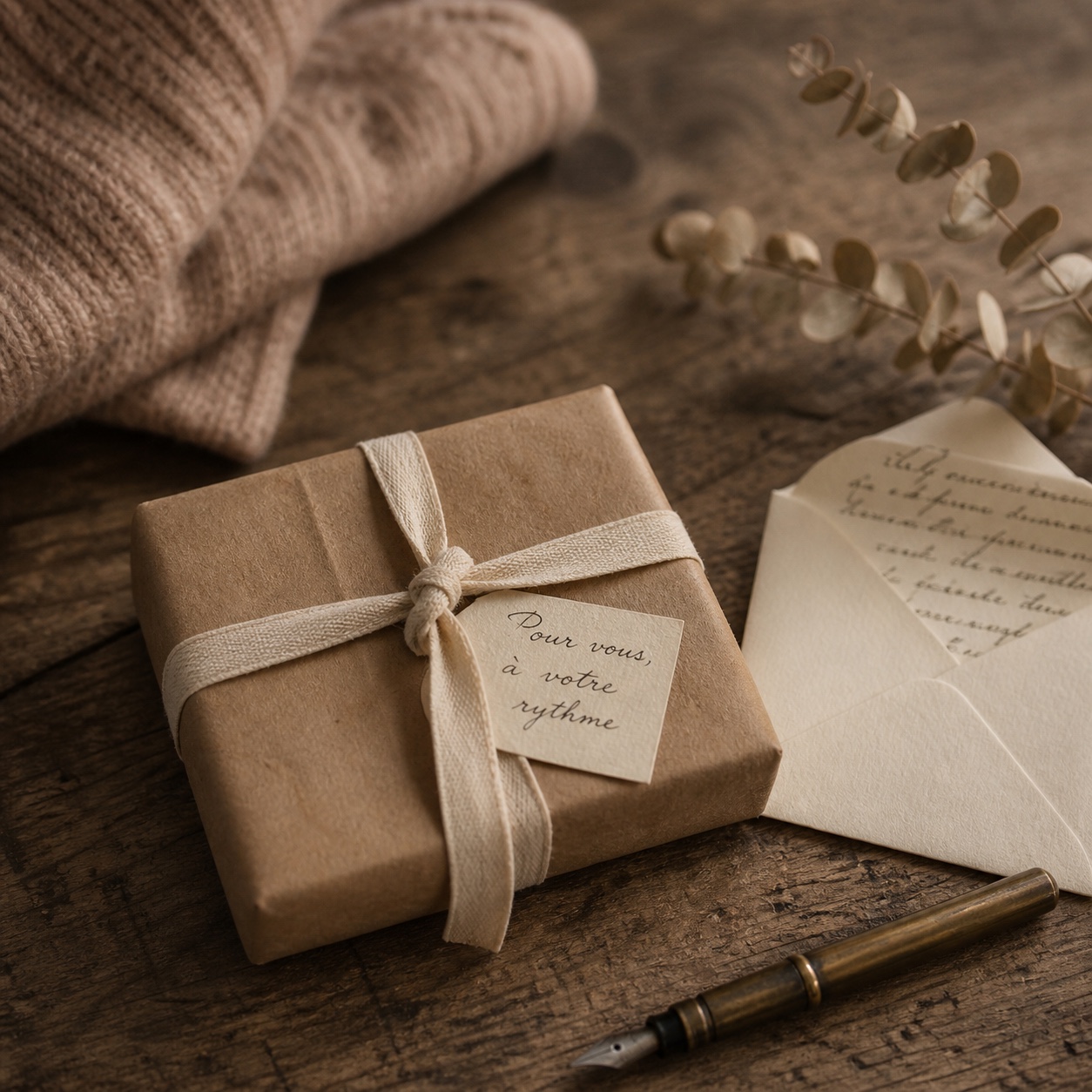
Gift ideas
Original gift ideas for parents: stepping off the beaten path
Why gifts for parents become harder to choose with time, and three ideas to offer something that truly looks like them, without falling into the usual clichés.
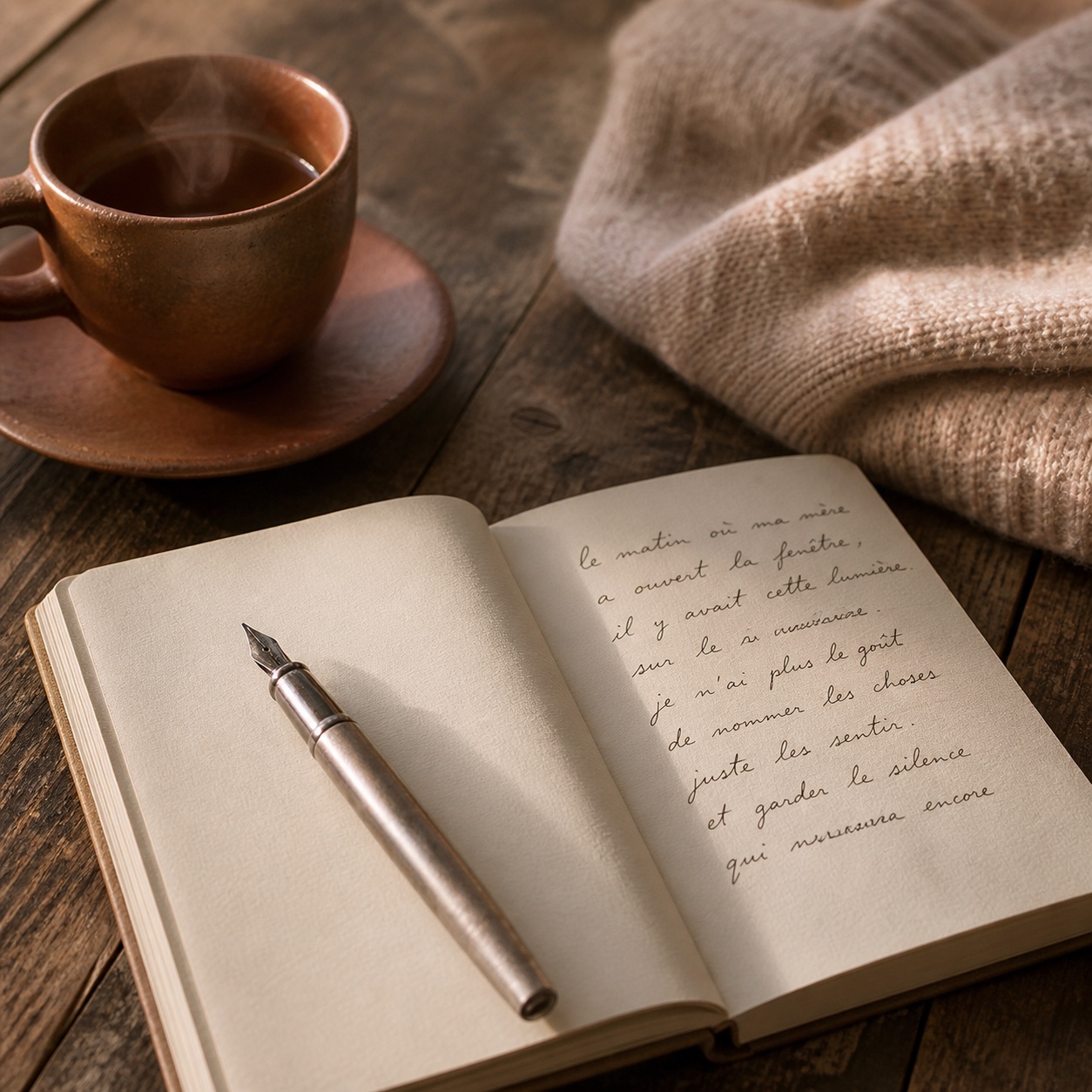
Passing on
Writing your memoirs at your own pace: starting without making a book
Writing your memoirs requires neither aiming at a masterpiece, nor following a chronological order. You can start anywhere, at your own pace, and keep the freedom of the fragment.