Gift ideas ·
Original gift ideas for parents: stepping off the beaten path
Why gifts for parents become harder to choose with time, and three ideas to offer something that truly looks like them, without falling into the usual clichés.
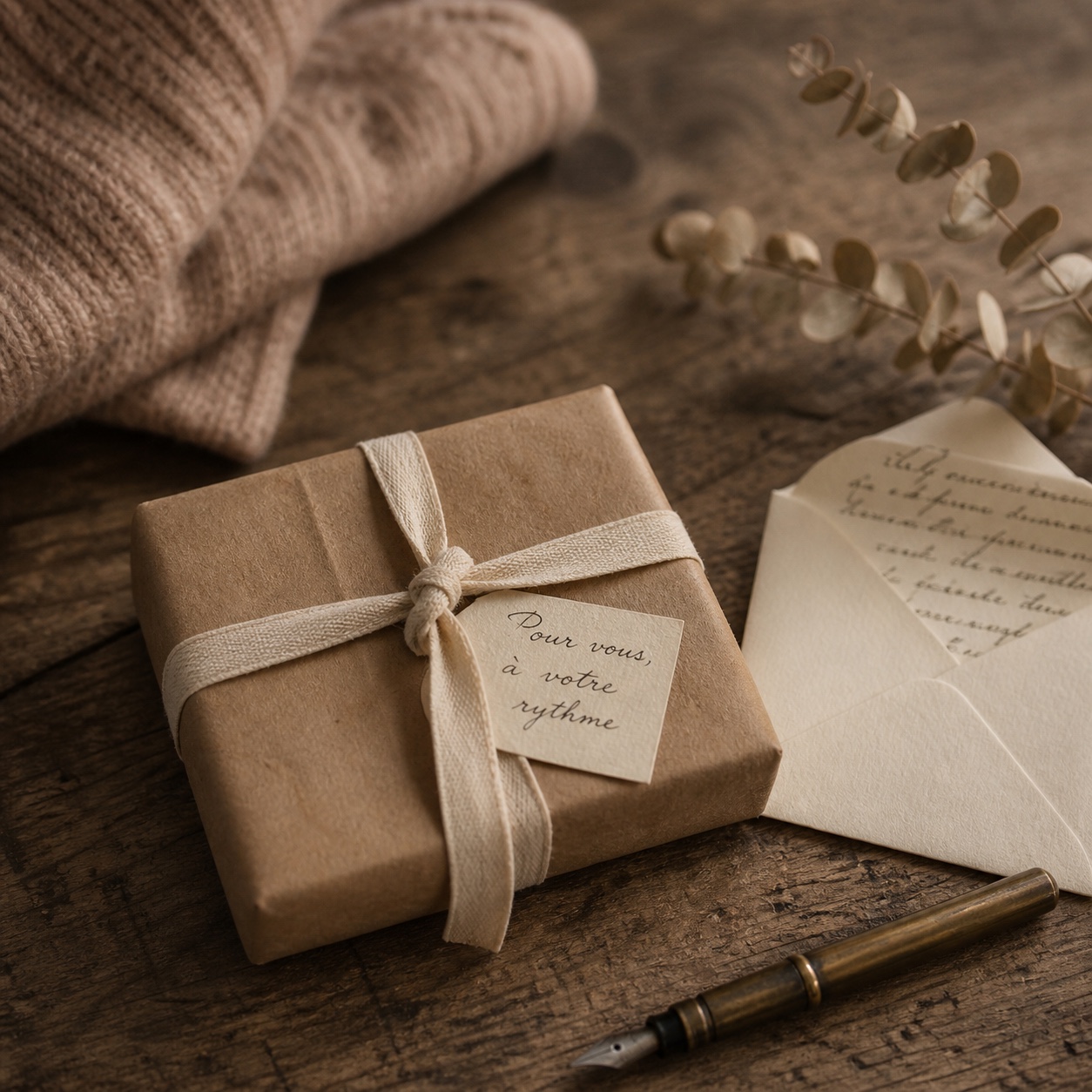
Choosing a gift for your parents becomes, with the years, one of the most delicate exercises there is. You’ve already given the scarf, the e-reader, the cookbook, the magazine subscription. You know they lack for nothing, and that they really don’t want any more clutter. And yet, every Mother’s Day, every birthday, you’d like to mark the moment.
This article gathers ideas that go beyond the reflex gift, and offer something that genuinely looks like them.
Why gifts for parents become hard
The further along we go, the less material things answer the need. Your parents have outgrown the age of status objects. Their home is full of things they no longer dare throw away. What they lack isn’t another utensil, but often something less tangible: time with you, the feeling of still being interesting in your eyes, the chance to pass something on that isn’t furniture.
The difficulty of the gift comes from there: you’re looking for something material to answer a need that isn’t. You have to flip the equation.
Three directions that step out of the cliché
A shared experience. Not necessarily a trip: a lunch in a place they love, an afternoon at a museum, a walk in the woods followed by a coffee. What matters is the explicit promise: this moment is for the two of us. Many parents no longer dare ask for your time. The gift is to lay it on the table without their having to claim it.
An object that carries a memory. A restored, framed family photo. An album that gathers the twenty most beautiful pictures of the past ten years, with a handwritten caption per image. A letter. The gift here doesn’t come from a shop: it comes from you, from the time you spent choosing, gluing, writing. That’s what they’ll keep.
A frame for them to tell. A book of questions, an audio recording, a subscription to a service like Carnely that gives them a place to put down their memories. This gift says, without saying it head-on: what you have to tell matters to me, and I’d like to keep it.
The gift that says “I’d love to read you”
This third direction deserves its own pause. It’s less obvious than the other two, and that’s precisely why it leaves a mark.
Offering a parent a place to write (or to speak, to set down a photo with a caption) is to tell them they have something unique to pass on. That what they lived through, their childhood years, the people they met, their convictions, their recipes, the places they knew, interest you. That you want to keep it, and that you want to read it.
Many parents don’t write, because they think you have to be a writer to do it. The gift lifts that doubt: you don’t write a book, you put down what comes, at your own pace, out of order. A recipe today, a letter in two months, the memory of a summer in five years.
It’s a gift that unfolds over time. It isn’t consumed the same evening.
How to present it without awkwardness
The pitfall of this kind of gesture is letting it slide into duty. If you offer a notebook with a hint that they’d better get on with it quickly, you turn a gift into a burden. The person on the other side hears pressure, sometimes fear, and puts the object away in a drawer.
The right register is invitation. Something like:
“I’m offering you this place because I’d love to read you. There’s nothing to finish, nothing to hand in. You go in when it comes. It’s for you, first.”
The handwritten note in the envelope counts as much as the gift itself. It places the gesture, gives it its frame, and closes the door to misunderstandings.
When to offer this kind of gift
The best occasions aren’t always the ones you’d expect.
- A round-number birthday (60, 65, 70): a threshold that invites you to look back without sadness.
- A retirement: time suddenly available, and the wish to do something with it.
- A transition: a move, the sale of a family house, a moment when you’re sorting and memory rises to the surface.
- An ordinary Sunday, no occasion. Sometimes that’s the gesture that lands the deepest, because it says: I didn’t need a holiday to think of you.
A question to ask before buying
Before clicking on anything, ask yourself a simple question: what do my parents have to pass on, and what could no one else possibly tell?
The answer doesn’t sit in an object. But it points to the right gift.
Going further
The writing gift is one door among others. If you’re looking for something specifically for a retirement, here are some directions. If you’d rather offer a concrete book of memories, gathering photos and stories, this article shows how to go about it.
Frequently asked
Related reading

Gift ideas
Retirement gift ideas: three directions that last
Retirement is a threshold. The gifts that mark it well aren't the ones you consume, but the ones that accompany the years opening up.
Gift ideas
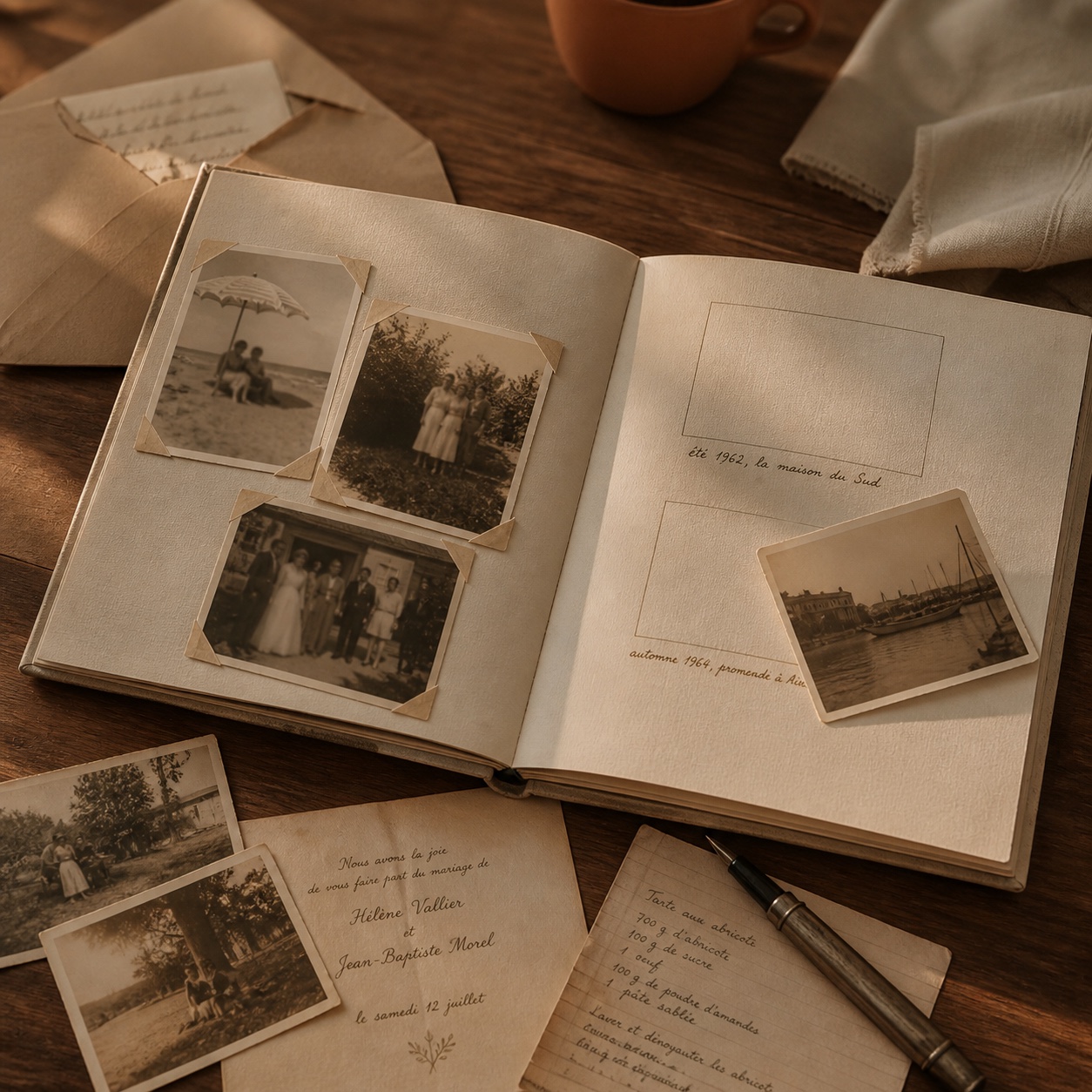
Family memory book: what goes in it, and how to make one
A family memory book isn't only a photo album. It gathers what would otherwise drift away: voices, gestures, recipes, anecdotes.