Passing on ·
Writing your memoirs at your own pace: starting without making a book
Writing your memoirs requires neither aiming at a masterpiece, nor following a chronological order. You can start anywhere, at your own pace, and keep the freedom of the fragment.
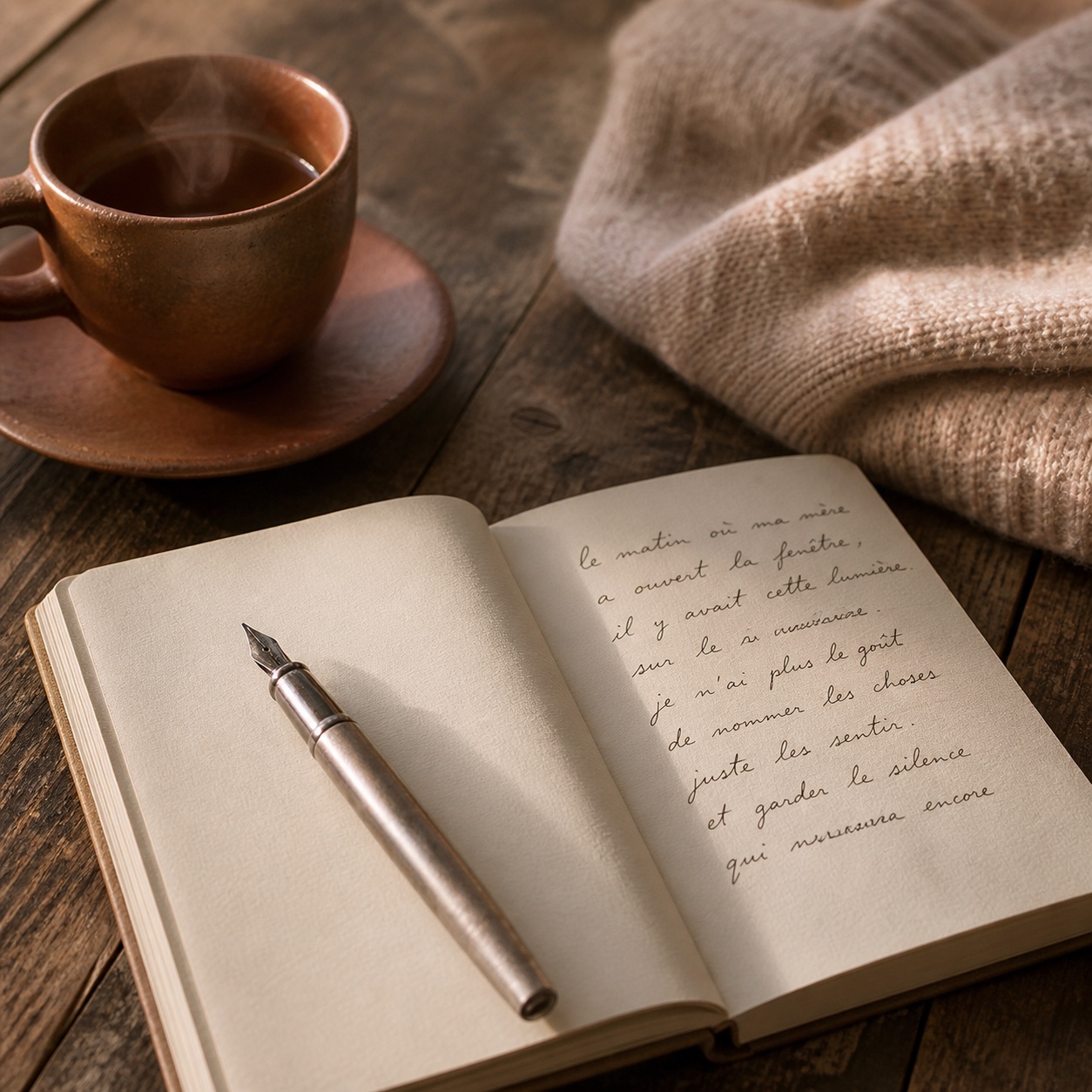
Many people, around sixty, feel a wish rising they don’t quite dare put into words: to write down what I’ve lived. Not to publish. Not to impress anyone. So that it doesn’t get lost. So that my children, my grandchildren, or simply someone in fifty years, can know.
And then the wish runs into a false idea: I’d have to write a book. And the book is too big a project. So nothing gets written.
This article suggests separating the wish to write your memoirs from the project of a book, and shows that you can begin tonight, in fifteen minutes, without a plan, without talent, without spare time.
Memoirs, journal, autobiography: getting clear
Three words circulate and blur. A little order helps you choose.
An autobiography tells a life along a chronology, with an overall aim. It’s a writer’s exercise. Very few people write one; even fewer publish.
A journal is kept in the present, day after day, and captures what you live as you live it. It has its beauty, but it requires a daily discipline that’s hard to hold.
Memoirs, in the plural, are something else. An assembly of fragments written with hindsight, without a required order, on the episodes that have marked you. The form tolerates blanks, repeats, changes of tone. It’s almost always what you’re really after, without knowing it, when you say I’d like to write down what I’ve lived.
The masterpiece myth
The other obstacle is the idea that you’d have to write well. Perfect sentences. Style. Metaphors. This myth paralyses a whole generation of people who have things to tell that no professional writer can ever reconstruct.
Your memoirs don’t have to be well written. They have to be true, that is, faithful to what you saw, thought, felt. A short sentence, an everyday word, a fragment that’s incomplete but sincere will always be worth more than a polished paragraph that rings hollow.
The practical rule fits in one line: write the way you speak to someone who loves you.
Where to begin
Four angles of attack almost always work.
1. A precise scene. Not a period of your life; a scene. The morning your father taught you to fish. The meal where you understood that your grandparents were afraid of something. The station where you waited two hours before any news. A scene tells in one or two pages. It’s manageable. After ten scenes, you have something.
2. An object. Pick an object you hold to (a watch, a book, a chair). Describe it in two lines. Then tell where it comes from, why you hold to it, who you’d like it to come back to. Objects are wonderful entry doors, because they fix memory.
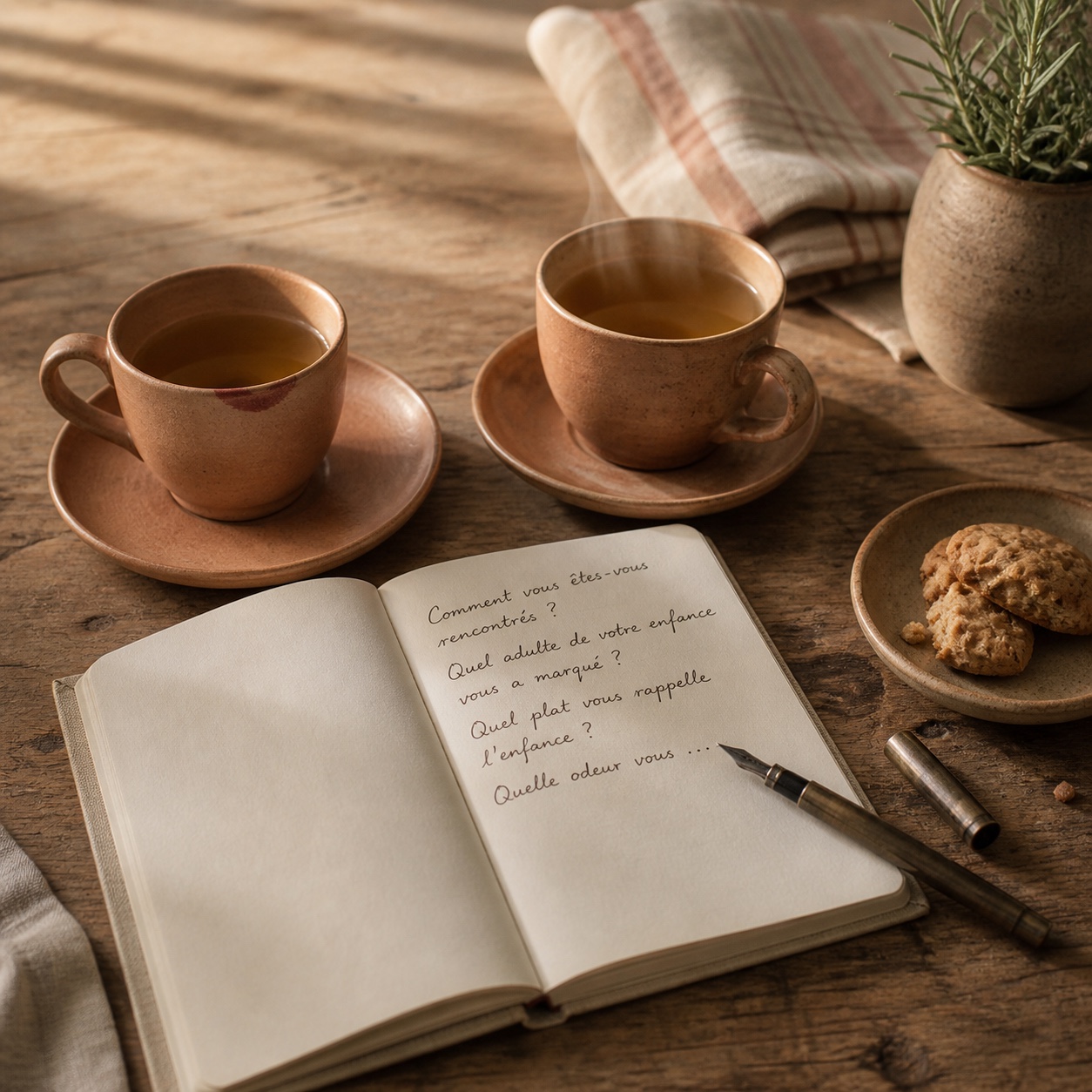
3. A question asked. If you’re stuck on the blank page, take a question (what’s my earliest memory? which adult of my childhood marked me the most?) and answer it. A question forces movement. The good questions to ask yourself are those you’d ask a parent, turned back on yourself.
4. An addressed letter. Write to someone specific: a child, a grandchild, a lost friend. The letter form frees you, because it replaces I’m telling my life with I’m telling you this precise moment. The voice gets clearer at once.
How to keep going
The point isn’t to write a lot at once. It’s to come back.
Set a regular but light frame. Twenty minutes on Sunday morning. An hour on Tuesday evening. No more, especially at the start. Regularity counts more than the length of sessions.
Don’t reread right away. Many people write ten lines, reread, find them poor, erase, never come back. Put the text down. Come back to it in two weeks. You’ll see it holds better than you thought.
Write where you are. Paper notebook, digital document, voice dictation, a service like Carnely. The right tool is the one you open without effort. If a tool requires a ritual to start, it’ll end up slowing the writing.
Accept the blanks. Three months without writing isn’t a failure, it’s a landing. When you come back, you’ll come back with something else to say.
Who to address what you write to
This question shapes the text more than you’d think. Who am I writing for?
Three possible answers, and they’re not exclusive.
- For yourself. To put words on things you’ve carried without formulating them. It’s legitimate. It’s often the main engine.
- For your children. So they know what you didn’t have time or courage to tell them. This addressee shifts the tone: you talk less about yourself, more about what you’d like to pass on.
- For those who’ll read you without having known you. Future grandchildren, distant readers. This addressee frees, because it lifts the pressure of immediate judgement. You write for someone who’ll discover you without prejudice.
Choose. Or let the addressee evolve. Many people start writing for themselves and end up writing for their grandchildren.
When the time comes, what to do with it
The question that comes up often: what’s the point of writing if no one reads it?
Several scenarios work.
- You keep it all to yourself, as long as needed. No reader during your lifetime. You decide later.
- You share as you go. A letter offered for a birthday, a fragment read out one evening with family, a recipe sent by mail. The passing-on happens piece by piece, without ceremony.
- You leave a deposit accessible when the time comes. That’s what services like Carnely allow: a place where you write at your own pace, accessible to those you’ve chosen, when the time comes. You keep the freedom to put down without having to choose now.
A question to ask yourself
Before closing this article, take two minutes and answer, in writing, one single question:
Which scene of your life would you like someone to know, in fifty years?
You’ve just written the first page of your memoirs.
Going further
If you also want to gather the memory of your own parents before yours, here’s a list of questions to ask them. And if you sense that what you’re writing might take the shape of an object to pass on, this article describes the possible forms of a family memory book.
Frequently asked
Related reading
Passing on
Questions to ask your parents: what makes the difference
The right questions to ask your parents aren't always the ones you'd expect. Here's how to open the conversation, and thirty directions across major themes.
Gift ideas
Family memory book: what goes in it, and how to make one
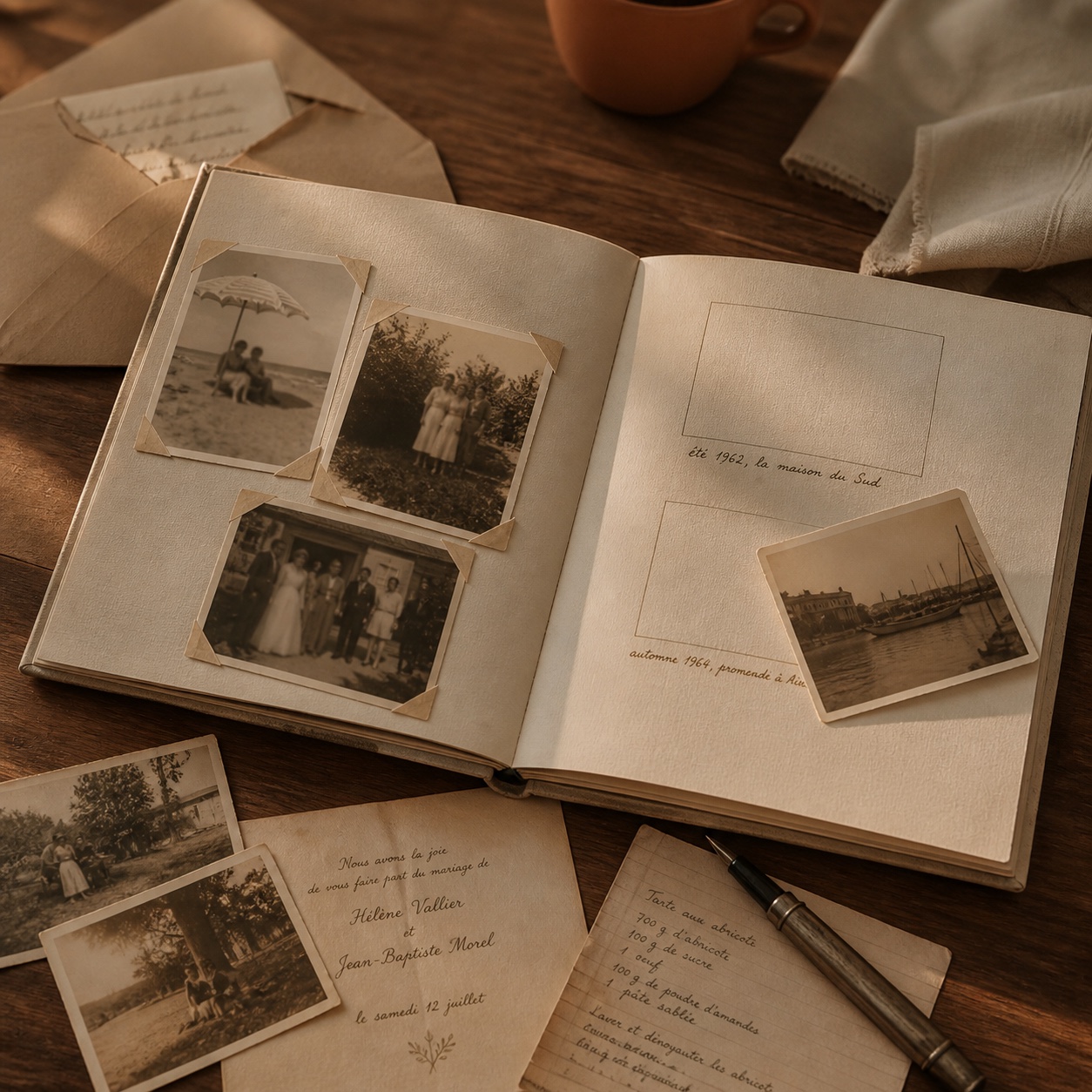
A family memory book isn't only a photo album. It gathers what would otherwise drift away: voices, gestures, recipes, anecdotes.