Original Mother's Day gift idea: for a mother who needs nothing
When the list of possible gifts runs out, what's left is what matters: what marks the relationship, what lasts, what's kept long after the day itself.
Mother’s Day is one of those yearly appointments that stiffen with the years. At twenty, you offered a bouquet or a box of chocolates and that was enough. At forty-five or fifty, it’s harder. Your mother has almost everything she wants. Recent gifts are gathering dust. And the Mother’s Day aisle smells of obligation paid back.
Yet the wish is still there. You want to mark the day, without falling into the empty gesture or the hollow luxury.
This article offers three ideas that step outside the scarf and the spa weekend, and that take seriously that at a certain age, what touches most isn’t the object any more but what comes with it, or what stands in for it.
The problem with a gift that adds nothing
At fifty, sixty, seventy, most mothers have accumulated. Tableware, scarves, books, perfumes, quiet jewellery. What they lacked at thirty has arrived, and what’s offered today only adds to shelves already full.
That’s what makes the Mother’s Day gift so strange at this age. It worked when it filled a gap. Today, it mostly signals the effort of having looked. The mother sees that, receives it kindly, and slides it into the drawer of good intentions.
The mismatch isn’t tragic. It simply means looking elsewhere. What the mother is waiting for, at this age, isn’t another object. It’s a gesture that doesn’t fade.
First idea: a gift that asks something of her
It’s counter-intuitive. We’ve learnt to offer easy gifts, ones that ask nothing in return. And yet some of the most precious gifts are the ones that ask the receiver to do something.
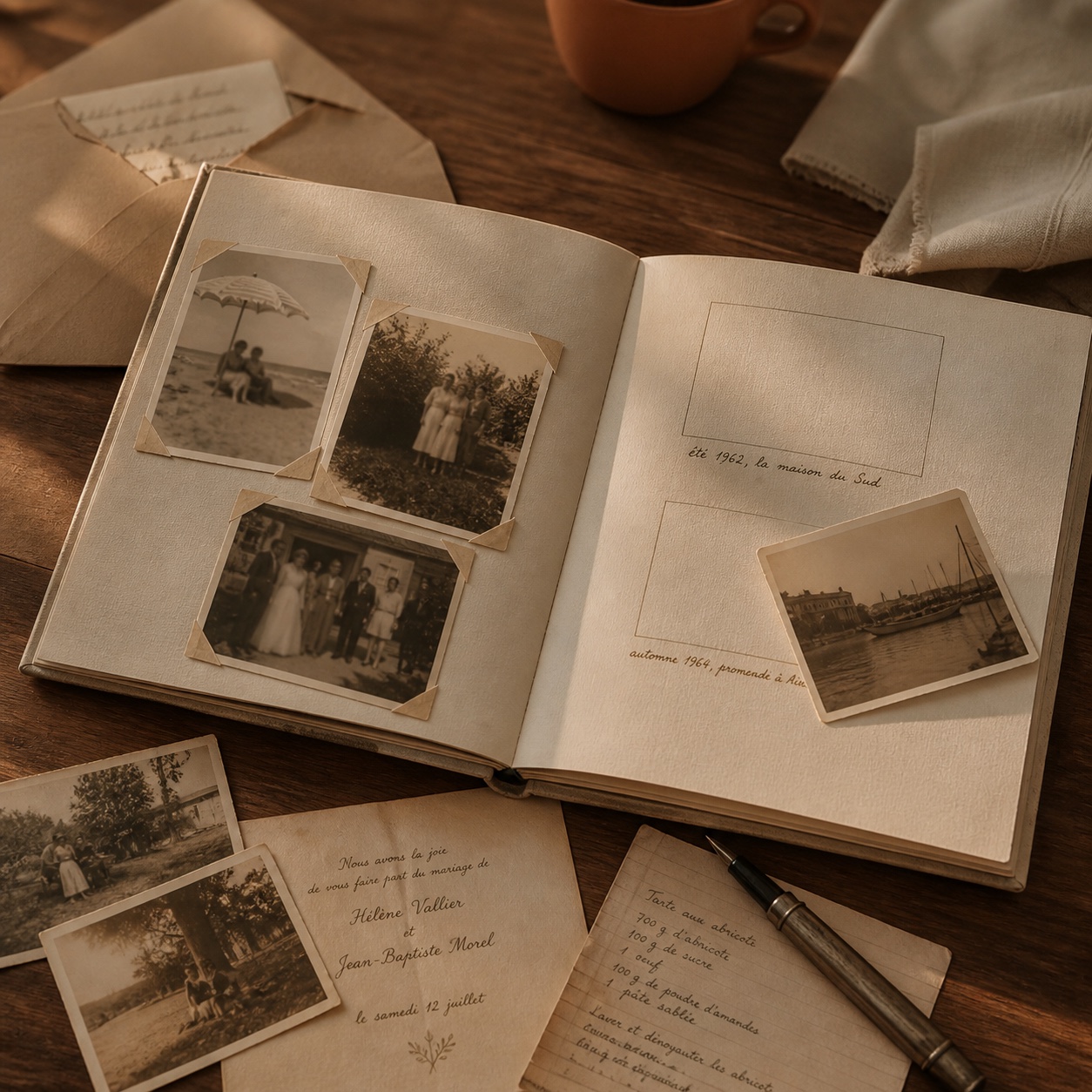
A notebook to fill, for instance. A book of questions where she’ll write what she has seen, lived, thought. A frame for her recipes. A box to complete, a photo album to caption. The gift is no longer to consume; it’s to inhabit. And what she puts into it, her children or her grandchildren will read one day.
This kind of gift avoids two pitfalls. It doesn’t say I didn’t know what to give. It says I’d like to read you. And it doesn’t end up in a drawer, because it opens and reopens, month after month.
Some contemporary services have grown around that idea. Carnely offers exactly that frame: a place where your mother writes at her own pace, from gentle questions, and where what she puts down stays accessible to the people she chooses. It’s a gift that unfolds over years, not over five minutes of unwrapping.
Second idea: a gift that takes a morning
The other form that holds is the gift that isn’t an object at all. Not a costly weekend, not a cruise, just time pulled out of routine.
A few shapes that work:
- A whole morning at her place, with no one else. You arrive with breakfast, you help her do what she’s been putting off for three months (sorting photos, writing a card, tidying a drawer), and you stay. No phone. No announced time to leave.
- A visit to someone she would like to see again. An old friend, a cousin, a place from childhood. You drive her, you organise. It’s precious at an age when driving gets tiring and reunions slip on their own.
- A dinner you cook, from her own recipes. You call her two weeks ahead so she dictates the gratin or the tart she made when you were a child. You cook it. You serve it. It’s almost always more moving than expected.
The common thread of these gestures is that they can’t be replaced with money. A morning at her place can’t be bought. That’s exactly what gives them their value.
Third idea: a written gift
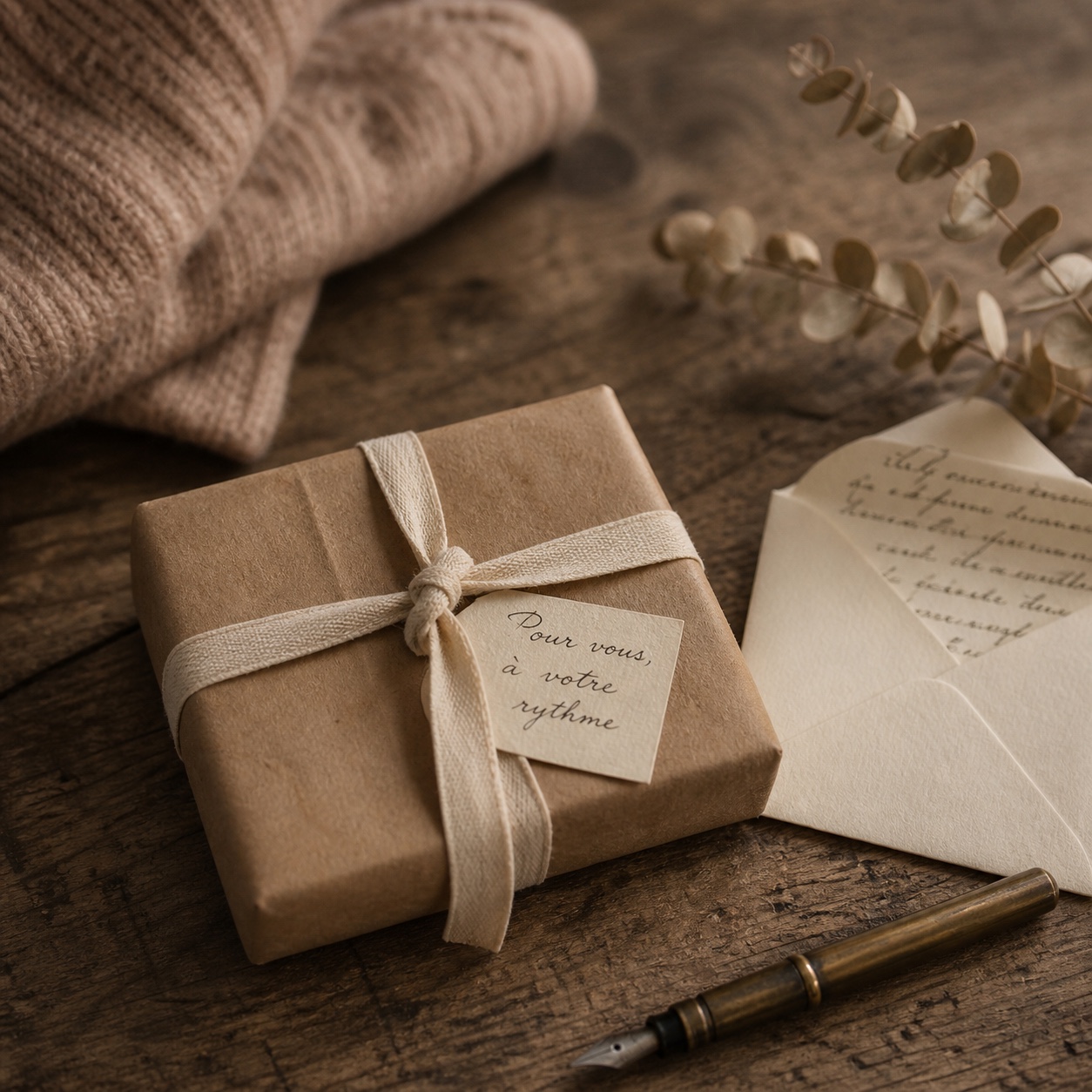
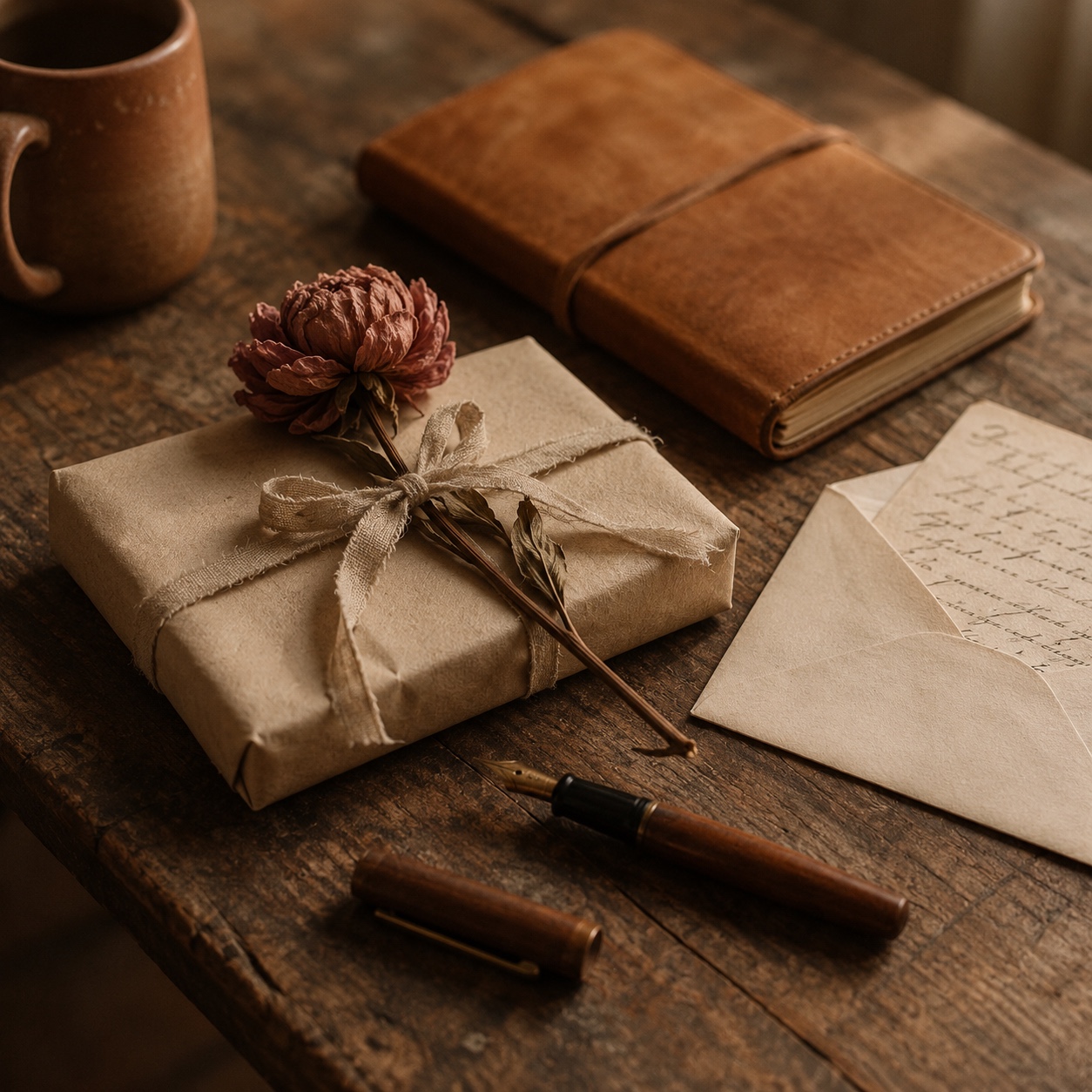
This is the simplest, and the most forgotten. A letter. Not a few words in a card. A real letter, two pages, by hand, that says something specific.
Many hesitate because it feels disproportionate, or because they fear getting it wrong. Both fears fall as soon as the writing starts. The letter doesn’t have to be well turned. It has to say one true thing: a precise memory, a thank-you long held, a soft admission, a question never asked.
Three angles of writing almost always work.
1. A precise childhood memory. Not a period; a scene. A day you remember that she may not realise mattered so much. The Sunday she made pancakes after bad news. The car ride to a wedding where she sang.
2. A late thank-you. Something she did when you were fifteen, twenty, thirty, that you never named. Mothers rarely hear thanks for what they consider ordinary. Saying it twenty years later goes deep.
3. A question you’d like to ask her. A letter can be a door. How did you know you wanted to teach? Why did we move in 1974? A question opens an exchange, without pressure.
Slip the letter into a book, into an envelope, into the bouquet if you bring one. You’ll see: it’s what she’ll keep after the rest is forgotten.
A gesture that lasts goes beyond the day
One last thing, wider than the three ideas.
Mother’s Day is a convenient frame for a gesture. It isn’t the only one, and it isn’t the best. Many mothers far prefer attention received on a Tuesday in November to a scarf offered in the crowd of a June Sunday.
If you offer a gift that unfolds over time (a notebook to fill, an annual walk, a dinner promised for September), you step out of the event. You set up a ritual. And at a certain age, the ritual matters far more than the surprise.
A question to choose by
Before closing this article, take two minutes and answer one question:
What will she still open, in five years?
If the answer is nothing, the gift probably isn’t the right one. Look for something the answer is yes for.
Going further
If you want to dig wider into gifts for parents who have everything, this article offers three ways out of the well-worn paths. And if the idea of a gift that gathers family memory appeals to you, here’s how a family memory book actually works.
By

Carnely's journal is kept by Pierre Goux, co-founder of Carnely. Articles on choosing and sharing what matters with the people close to you.