Gather ·
Organizing a family reunion, from invitations to photos
The date, the place, who brings what, and where everyone's photos will end up: a family reunion comes down to a few decisions made early.
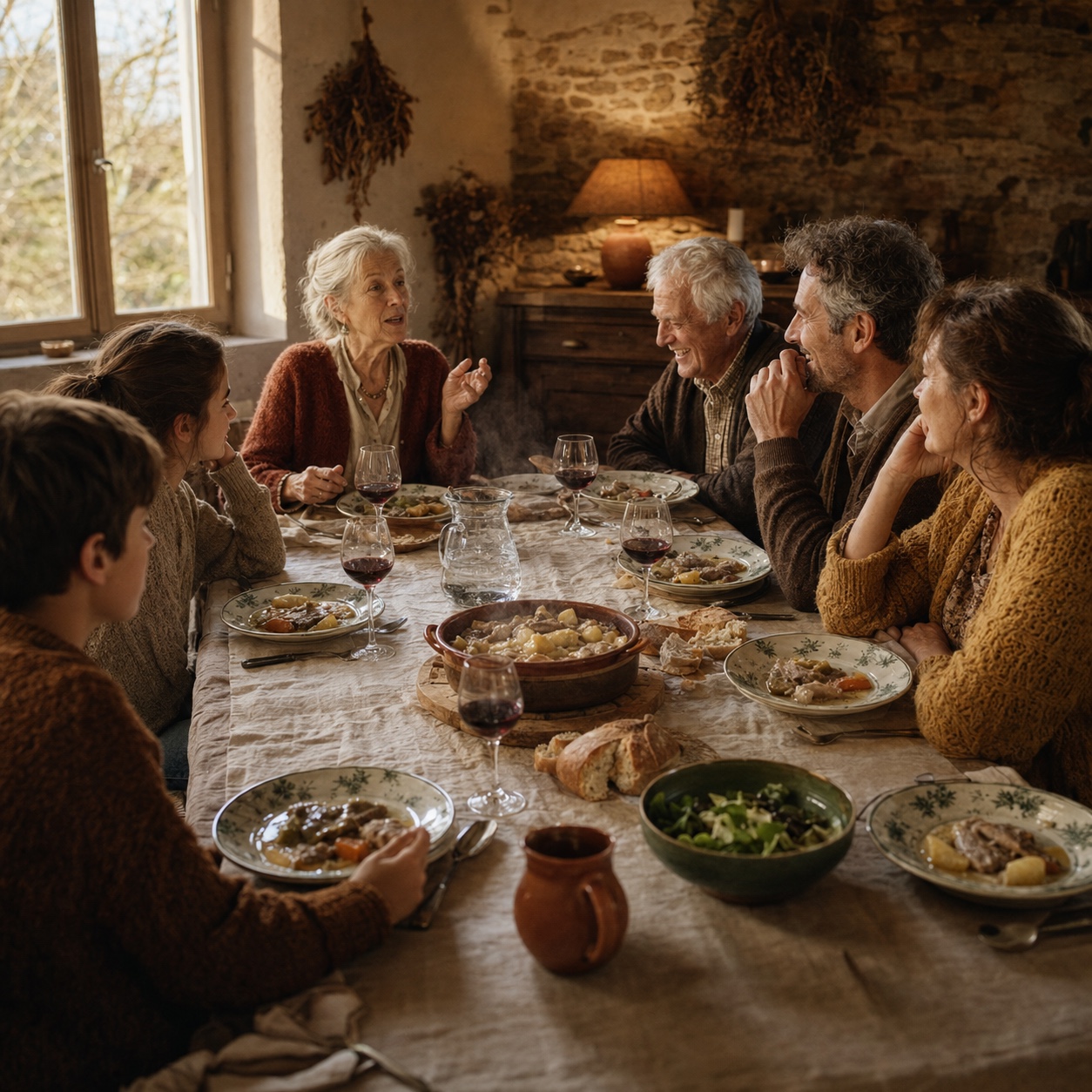
A family reunion often gets decided at the end of a family meal: someone says that everyone should get together again, everyone agrees, and six months later nothing has moved. It is not a lack of will. Between the idea and the day itself stands a series of decisions nobody feels entitled to make alone.
The good news: a family reunion takes little money and few meetings to organize. It takes a date set early, a place that can hold the numbers, shared responsibilities, and a clear invitation. Here is the method, in order, down to the question everyone forgets: what will become of the photos of the day.
Set the date first, the rest will follow
The first thing that blocks a family reunion is never the venue or the budget: it is the date. The larger the family, the more calendars contradict each other, and the longer you wait for a perfect slot that does not exist.
Set the date six to nine months ahead, and accept that it will not suit everyone. A Saturday in late spring, or the Saturday of a long weekend, gathers more people than a summer weekend when everyone is already away. Two or three people propose three dates, the family votes, the broadest date wins. Deciding early is a service to everyone: people can plan, book time off, buy train tickets.
Once the date is set, hold it. A reunion postponed twice does not happen.
A place that can absorb the numbers
The right place is not the most beautiful one; it is the one that absorbs the numbers without exhausting anyone. Three questions settle it: can thirty people eat there, even if it rains? Can the children run around without constant supervision? Will one person end up carrying everything alone?
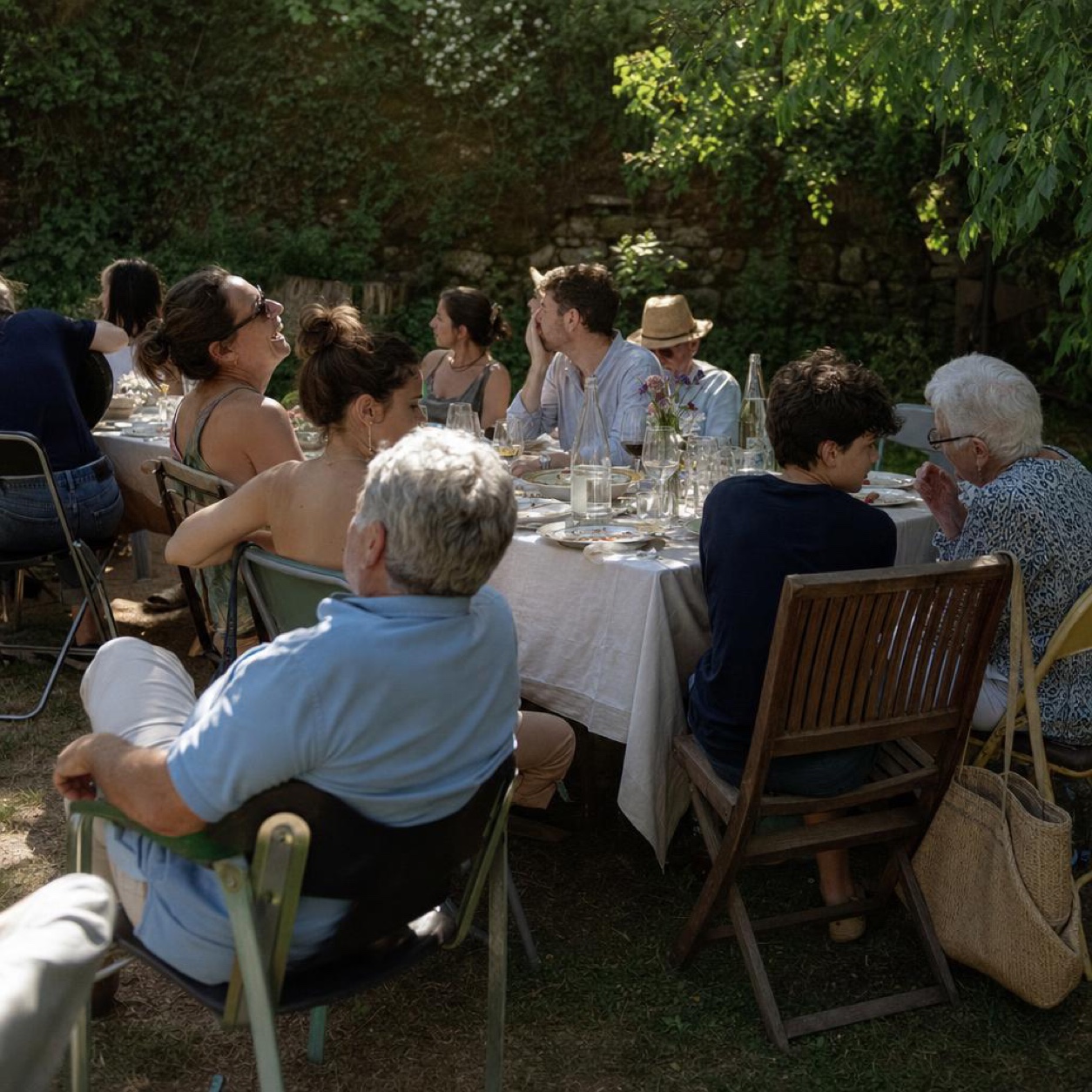
A family member’s garden remains the safe choice, provided the load is shared (more on that below). A village hall costs little and spares the house. A house rented from one Saturday to the next turns the day into a weekend for those coming from far away. Choose according to the family’s geography: the most central place usually beats the most charming one.
Share the work instead of carrying it
The person who first suggested the reunion did not sign up to do everything. If they carry the day alone, they will spend it in the kitchen, and there will be no second edition.
The simplest arrangement fits in one sentence: each household takes charge of one thing. One brings salads, another desserts, a third handles drinks, a fourth tables and chairs. Someone keeps the list, someone does the shared shopping, someone makes the coffee. Write the arrangement down and send it with the invitation: what is written gets done, what is assumed gets debated on the morning itself.
An invitation that makes people come
A reunion invitation does not need to be beautiful; it needs to be clear. Four pieces of information, in this order: the date, the place, what each household brings, how to confirm.
One message is enough: a reunion on Saturday May 30th at Anne’s, each household brings a dish, drinks are taken care of, confirmations by the end of March with the number of people. Send it early, follow up once, and hand the follow-up to one person per branch of the family: people answer their brother faster than a distant cousin.
Think of those outside the usual loop: the great-uncle without a smartphone gets a phone call, the cousin abroad gets the message two months earlier to book flights.
On the day: plan little, let it live
The temptation to over-plan is real: organized games, a tournament, a family quiz, a slideshow. Plan one or two, not six. A reunion succeeds on its free time: conversations picking up where they left off, children turning into a pack, old photographs passing from hand to hand.
Two things are still worth planning: a shaded spot where the oldest can last the afternoon, and a group photo, announced in advance, before the first cars leave. Everything else can improvise itself.
The photos of the day are prepared beforehand
Here is the question nobody asks while planning, and everybody regrets afterwards: where will the photos go? The day will be photographed by fifteen phones. Without a place prepared for them, those photos stay scattered: a few will pass through a group chat created for the occasion, which will fall silent by September, and no one will ever hold the whole day.
Preparing it takes five minutes, before the reunion: open the place where everyone will deposit, and put the link in the invitation. Some create a shared folder; it is better than nothing, but everything lands there in bulk, and nobody opens it again. A space designed for the moment, like a Carnely chapter, does something else: each person enters through a link, puts down their chosen photos, and tells in a few lines what they lived that day. It is free for every guest, private, and it stays: the reunion as told by the cousin from Manchester next to the great-uncle’s version. The next day, everyone holds the day of the others, not just their own.
What makes people do it again
A successful reunion is recognized by one sentence, always the same, heard as people leave: we should do this again. What brings it back is not the menu or the entertainment. It is the feeling of having found people again, and of keeping something from it.
Set the next date while everyone is still there, even loosely: next year, same season, at Paul’s. And in the week that follows, once everyone’s photos and stories are gathered, send one last message to all. A reunion that leaves a common trace calls for the next one.
By

Carnely's journal is kept by Pierre Goux, co-founder of Carnely. Articles on choosing and sharing what matters with the people close to you.