Gather ·
Family Christmas traditions worth starting this year
Original ideas that ask too much die within a year. What makes a tradition is the gesture that comes back. Three simple ideas, and a way to keep each Christmas.
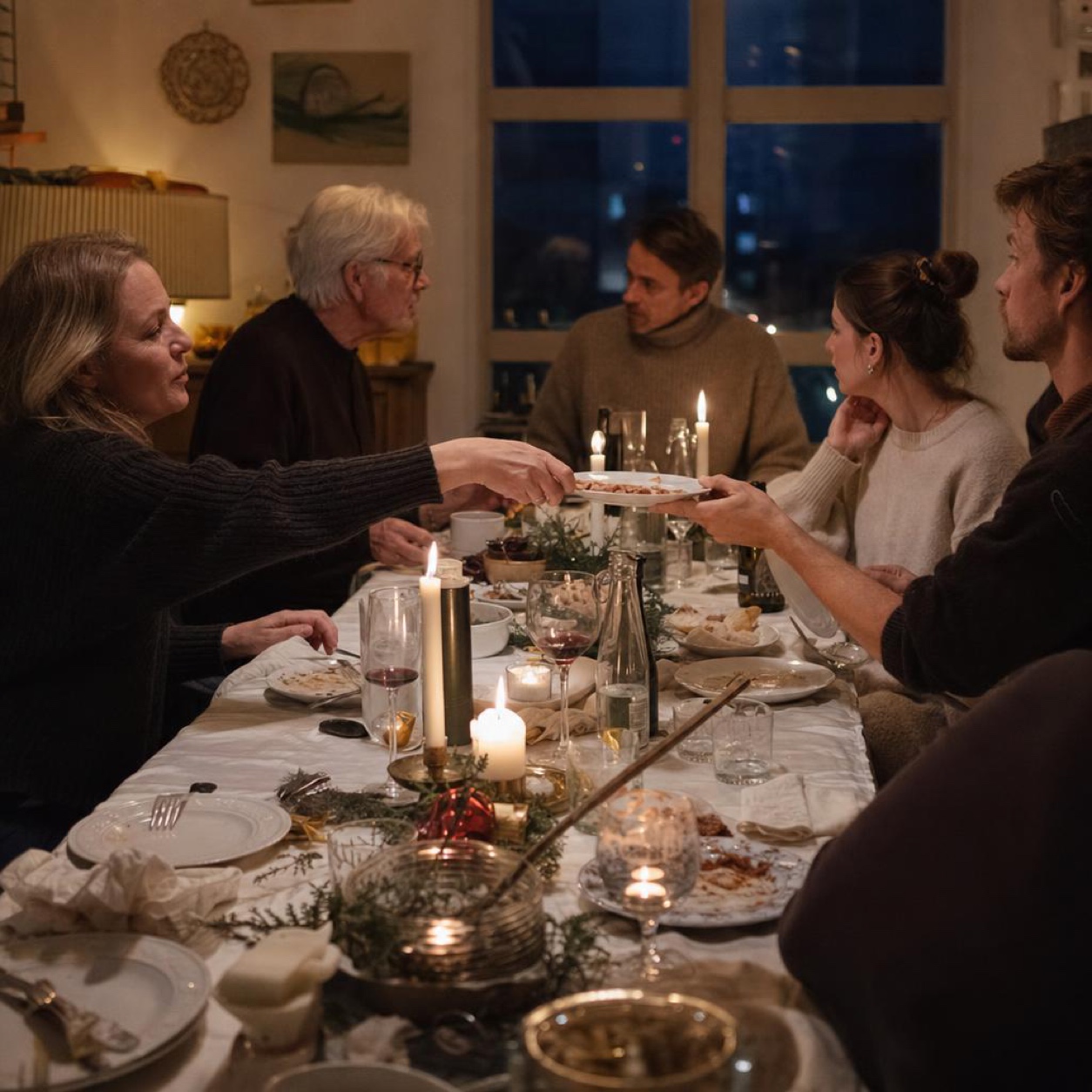
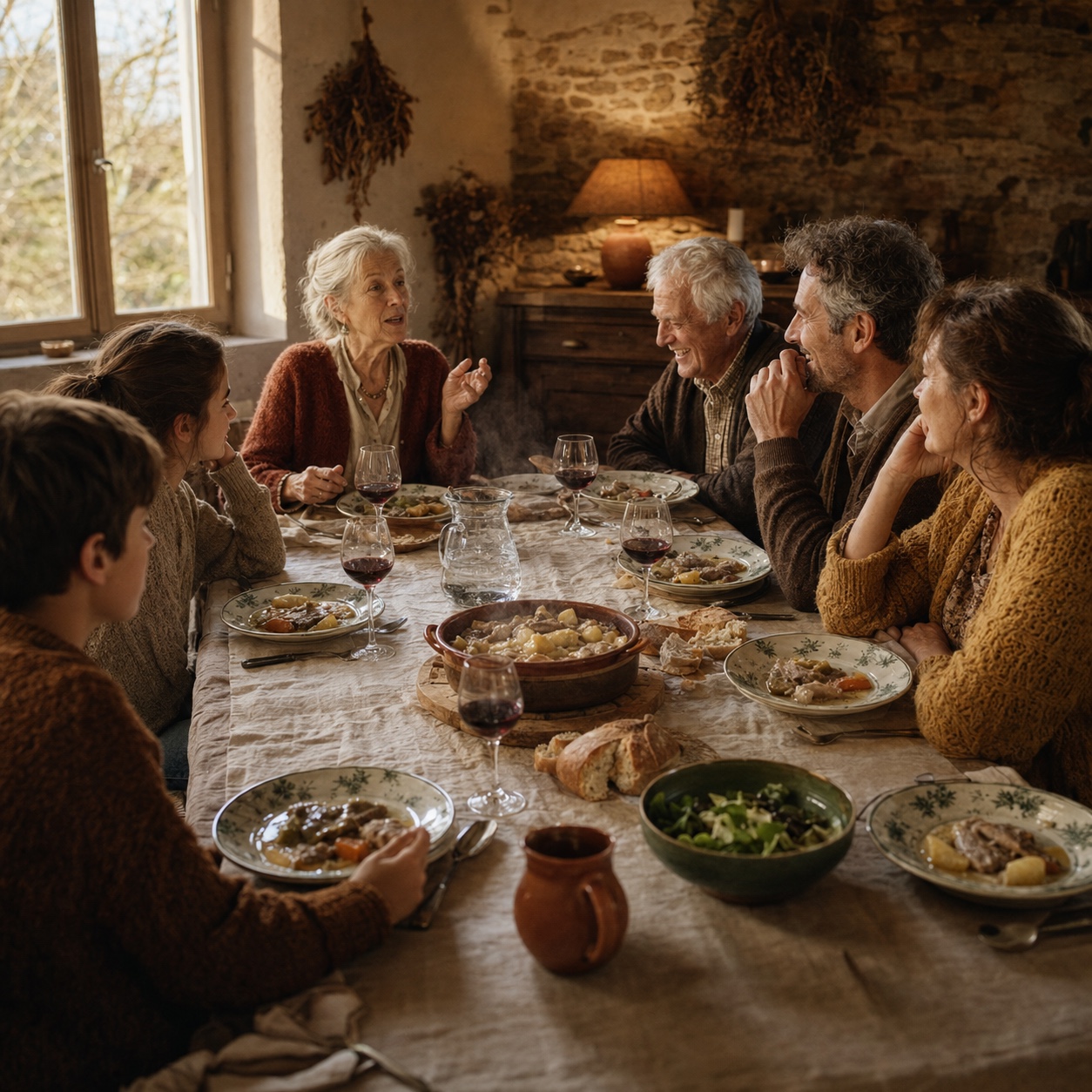
For many families, Christmas is the one date in the year when everyone ends up around the same table. The cousins you see once a year, parents getting older, the newcomers being introduced. Precisely because that gathering is rare, you want to mark it, and every autumn the same search comes back: an original idea for Christmas with the family.
The paradox is that the most original ideas are often the ones that last the least. The elaborate game that takes two hours to set up, the scripted treasure hunt, the theme imposed on everyone: brilliant one year, exhausted the next. A tradition is not judged on its first evening. It is judged in its tenth year.
Here is what makes a tradition hold, and three simple gestures that repeat well: one you prepare, one that plays out at the table, one that keeps.
What actually makes a tradition
A tradition is not entertainment. It is a gesture everyone knows, that comes back every year at the same moment, and that nobody needs to organise weeks in advance. The aunt’s gratin, the song butchered at dessert, the walk on the morning of the 25th: nothing spectacular, and yet those are the gestures people still tell years later.
Three simple criteria help judge an idea before adopting it. It asks little: no hard-to-find equipment, no preparation resting on one person’s shoulders. It leaves room: everyone can take part in their own way, the eldest as much as the student who arrived the night before. And it repeats well: the second year, it is more awaited than the first.
If an idea ticks all three, it has a chance of becoming a tradition. If not, it will remain one good evening, which is fine too.
The tradition you prepare
The photo under the plate. A few days before the meal, each person chooses one photo from their year, a single one, and has it printed. On the evening itself, the photos are slipped under the plates, at random. At dessert, everyone pulls out the one they found, and the person who brought it tells its story.
The gesture asks little: one photo, one print. But it manages what few games manage: everyone arrives with a piece of their year, and the whole table listens for two minutes. The student shows the flatshare, the grandmother her garden in June. Nobody prepares a speech; the photo does the work.
A variant: the rotating dish. Every year, someone else takes charge of one dish of the meal, their own, one from their region or from their in-laws. The table shifts slightly each year, and the menu tells who came.
The tradition at the table
The question of the year is the simplest of all: the same question, asked every Christmas, around the table. “What are you keeping from this year?” is enough. Answers last one sentence or ten minutes, nobody is obliged, and the effect comes from repetition: the question stays the same, the answers change, and that contrast is what becomes an archive over the years.
Another gesture that holds well: the story of a Christmas past. Each year, someone tells a Christmas from long ago, their own or one that was told to them. The Christmas of 1987 when the car got stuck in the snow; the one when the roast burned. The youngest discover that the family existed before them; the oldest discover that people want to listen.
The tradition that keeps: the chapter of this Christmas
The next day, the photos of the evening go out in a group chat, pile up for a few days, then disappear under whatever follows. By March, nobody knows where the dessert photo went. That is the fate of the ordinary Christmas: lived together, scattered at once.
Hence the third tradition, the one that keeps the other two: opening a space each year for that one Christmas, where everyone puts down a few chosen photos and a word. Not the fifty pictures of the meal: the three that are worth it. Those who could not come put down their own evening too, and read everyone else’s. The following year, before opening the new one, you reopen last year’s.
That is what a Carnely chapter makes possible: a private space opened for one moment, where each person enters through a link and puts down what they chose to keep. Over the years, the family builds a shelf of Christmases, leafed through at the next one.
This tradition ticks all three criteria. It asks little: one link sent, three photos per person. It leaves room: everyone puts down what they want, including nothing. And it repeats better than any other, because every year adds a volume to the shelf.
Starting without announcing it
A tradition cannot be decreed. Announcing in November that this year the family is starting a tradition is the surest way to kill it: everyone feels summoned. A tradition is done a first time, without being named.
Slip the photos under the plates without warning. Ask the question of the year as an ordinary table question. Open the chapter and send the link with two photos already in it, to show the gesture rather than explain it. If the idea is right, someone will ask next year: “are we doing the photos under the plates again?” That request, not your announcement, is what makes the tradition.
And if nobody asks, the idea was not the right one for this family. What remains is a good evening, and that is already something.
By

Carnely's journal is kept by Pierre Goux, co-founder of Carnely. Articles on choosing and sharing what matters with the people close to you.