Keep ·
Same place every summer: writing thirty years of returning
You have been going back for twenty, thirty, sometimes forty summers. The family holiday place holds an intimate geography no photograph captures. Here is how to set it down.
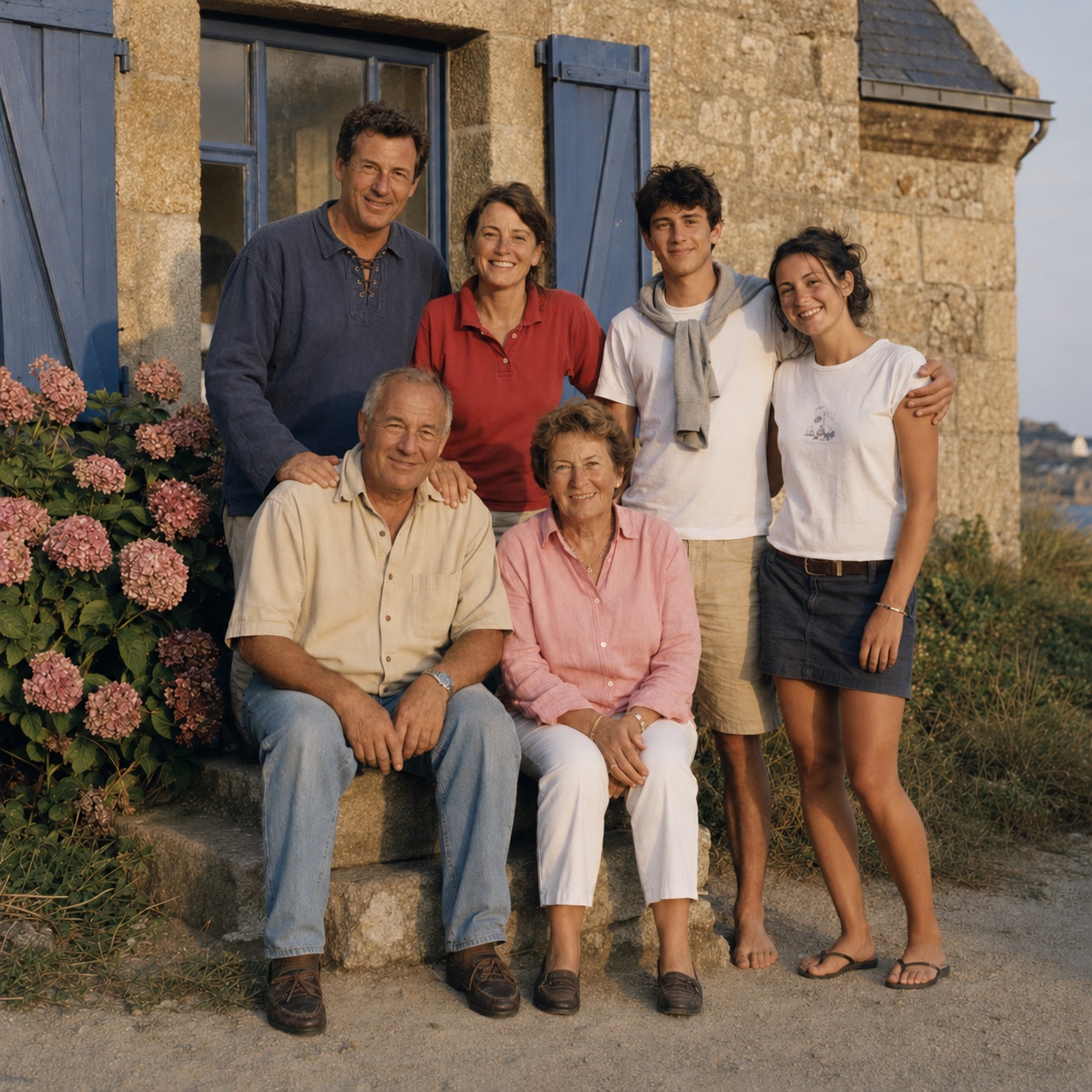
There is a place you have been going back to every summer for a long time. A family house by a lake, the little village in the south you used to drive down to with your parents, the same campsite pitch you book year after year, a stretch of coast where your children learned to swim. You do not think of it as “the holidays”. You go there because that is where you go.
And then one summer, something has shifted. Your parents do not come anymore, or not for as long. The bakery on the corner has closed. The neighbouring house has been sold to people you do not know. The little path that led down to the beach has been widened. Your children, now grown, have not taken the same week as you. Nothing dramatic, but something is moving quietly.
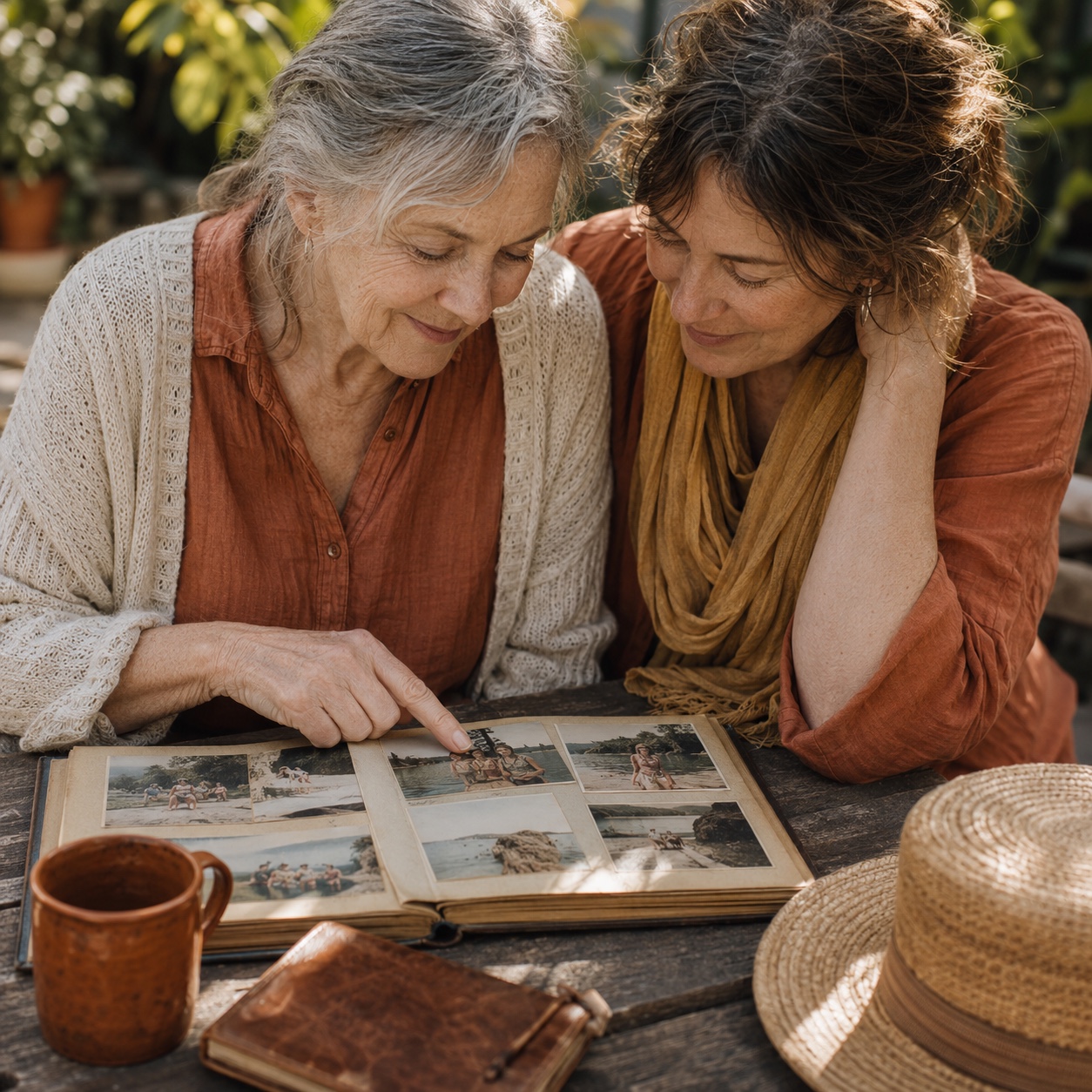
The place you return to each summer holds more than a postcard. It carries a silent calendar, learned gestures, faces that appear and disappear. None of that gets passed on through photo albums. It gets passed on the day someone takes the time to write it down. This article offers a few angles for doing that, without ceremony.
What really gets passed on in a place you keep returning to
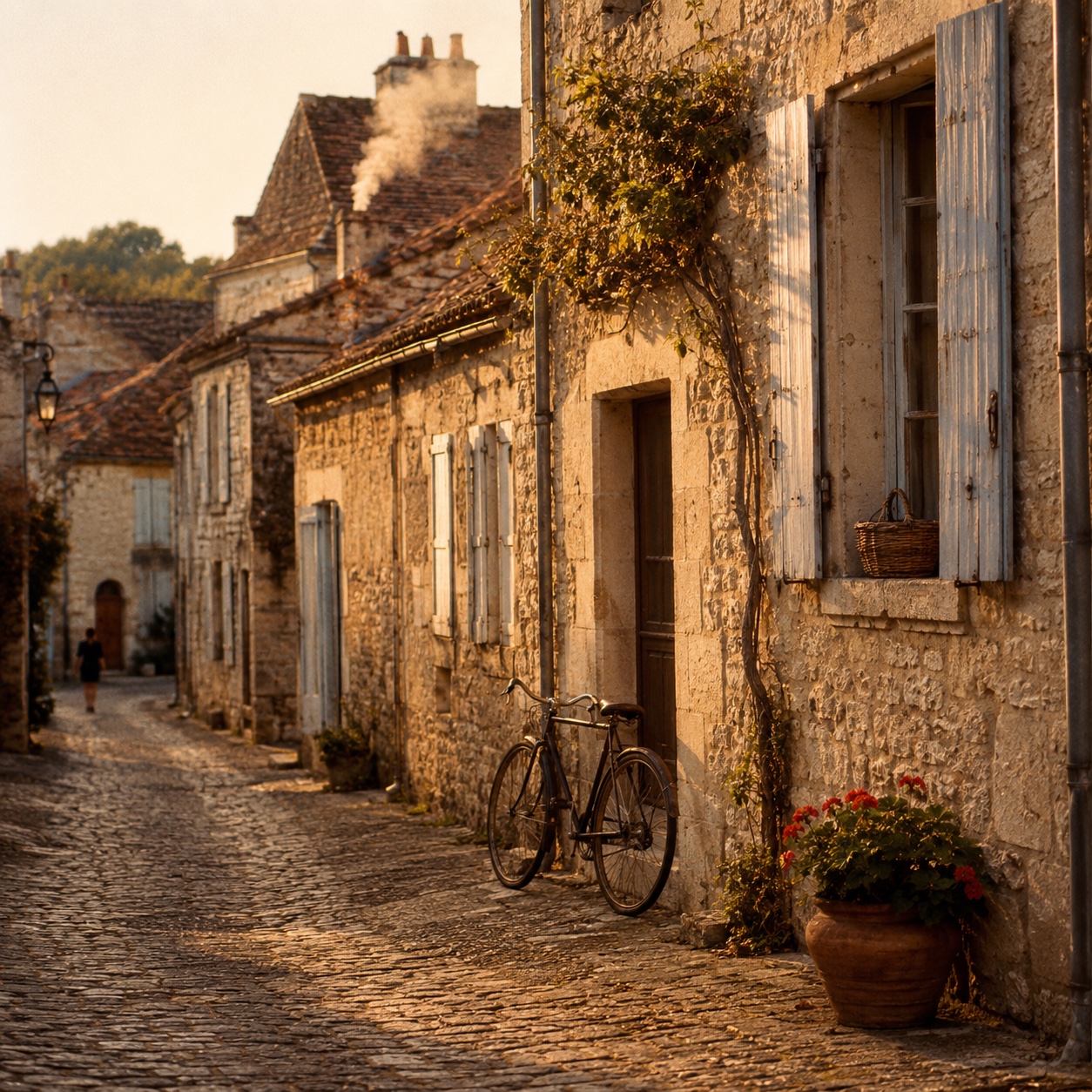
When you ask someone to tell you about their long-standing summer place, they rarely start with the name of the village. They start with something else. The smell of the ground after the August rain. The sound of the gate you have to lift to open. The high street at six in the evening, when the shutters open again.
What makes a place this place and not another is not its address. It is the whole set of small things you have learned there without noticing.
That includes:
- The calendar of the place. When the cicadas start. When the market shifts to its summer day. Which is the first week the sea is really good. By what date the shutters have to come back down if you leave before the end of August.
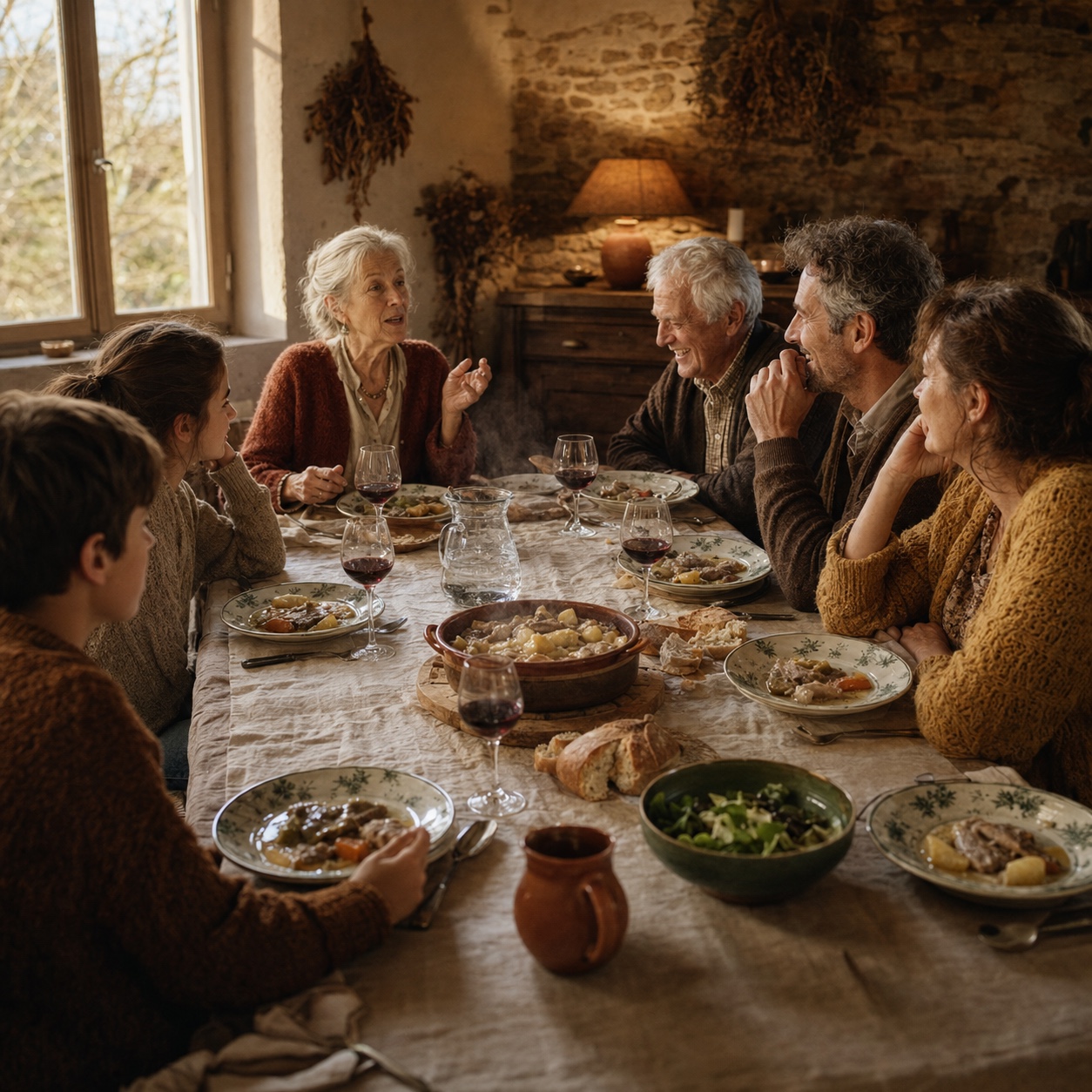
- The faces that return. The neighbour you only ever met again there, and only recognised in that place. The baker who remembered your daughter’s first name. The family at the next pitch you shared an aperitif with each summer without ever writing to one another in between.
- The rituals of the stay. The first thing you do on arrival (open the shutters, check the windows, switch on the water heater). The walk that opens the first evening. The market you never miss. The restaurant you allow yourself once, always the same one.
- The corners you know. The path down to the cove that no one knows who first traced. The tree you used to sit under to read. The stone table behind the house where the children laid out their treasures. The room that is always used for the same thing.
- What changes. The grocer’s that became a restaurant, the field that became a housing estate, the dune that has receded, the family that no longer comes. And also what holds out: the umbrella pine still standing, the old lady at the end of the lane, the church bell at noon.
That is what fades first. Photographs, you have. The weave of what the place actually meant to you, you do not.
Where to start writing it
Rather than trying to tell everything, pick an angle. Four work well.
1. A particular arrival. Not your arrivals in general. One that comes back to you. The first summer your daughter walked from the car to the front gate without being carried. The one when your mother stayed in the garden while you unloaded the boot. The one after a difficult winter, when you found the place intact and felt it as a relief. A scene fits on two pages. The rest will come.
2. The map of the place. Not a real map. Your own. The walk from the house to the beach, with the stops along the way (the bench, the fountain, the house with the blue shutters). The names you give the rooms (“the back bedroom”, “the lower sitting room”, “the summer kitchen”). The corner of the garden where the hose is hidden. That intimate geography exists nowhere else. A single page is enough to set it down.
3. A summer that stood out. The summer when it rained without stopping. The summer when you went alone after a separation. The summer when your father came for the last time. The summer when your granddaughter learned to swim. One summer always stands out from the others in a long series. Tell that one. The date, the context, what was at play, what was said on the last evening.
4. A habit that has lasted. The siesta on the terrace at three. The Thursday market. The aperitif at dusk with the neighbours. The walk to the lighthouse on the fourteenth of July. Pick a habit you inherited from your parents, or one you started yourself. Tell where it came from, what it has lived through, who has taken it up. A habit fits in thirty lines.
When the place changes, or is lost
At some point, the long-standing place is no longer quite yours. The family house has been sold, or held in complicated joint ownership. The campsite closes, the village shifts, the neighbours change. Part of the place stays where it is, under other eyes. Another part you carry with you, in memory.
This is exactly when the writing helps. Not to freeze what was. To let those who come later know what the place carried. If you have children who probably will not go back, or grandchildren who only knew it as small children, it is to them that you are writing. Without heavy nostalgia. A page is enough to set down: This is what this place was for us. Here is what we did there, who we met there, what was played out there.
It is also, sometimes, the moment to write to those who take it on. If a family house passes into other hands (cousins, new owners, long-standing neighbours), a short note left in the kitchen drawer is worth more than silence. The garden tap freezes in winter, drain it in October. The cherries ripen around the fourteenth of July. The gate sticks, lift it as you pull. Those three lines are a gift for whoever picks it up.
What you can only write on the spot
There are things you can only write at the moment you are living them. Not the memory rebuilt in November, from a city flat, trying to recall what time the sun hits the table. The detail that brings the place alive, you write at the table, during the others’ siesta, with the light shifting while you look for the words.
Holidays offer something rare for the rest of the year: slow time. Three minutes in the morning before the house wakes up. Twenty minutes after lunch while the coffee runs. Half an hour at the end of the day, on the terrace, before the aperitif. That is exactly the shape of a notebook page.
The simplest is to keep the notebook on site. A notebook left in the drawer of the summer kitchen, which does not move from one year to the next. You reopen it on arrival, add what this summer has brought. Over the seasons, it becomes a chronicle of the place rather than a personal journal. If the house is shared with other branches of the family, they can write in it too, at their own pace, without needing to ask.
For those who prefer a format that does not get lost in a house move, a place made for this kind of thing like Carnely works the same way: you open it when the urge comes, write three lines, add a photograph taken that morning. The page stays there, dated, retrievable next summer when you look for what you had noted the year before.
One thing to set down this summer
If you close this article and want to begin today, take ten minutes after coffee and write the answer to one question:
In your long-standing place, what is the first thing you do on arrival each summer? Since when, and who taught you?
A few lines are enough. You have just written a page that, in twenty years, will exist nowhere else.
Going further
If you also want to gather what was played out on holiday beyond this one place (one-off trips, summers that were different), the article on summer memories opens another path. And if this place of return also carries rituals of its own, the articles on family rituals naturally extend the work.
By

Carnely's journal is kept by Pierre Goux, co-founder of Carnely. Articles on choosing and sharing what matters with the people close to you.