Share ·
Sharing your childhood with your children, without writing a memoir
Your children know the adult you became. They know almost nothing about the child you once were. What fades fastest isn't an event, it's the texture of ordinary days.
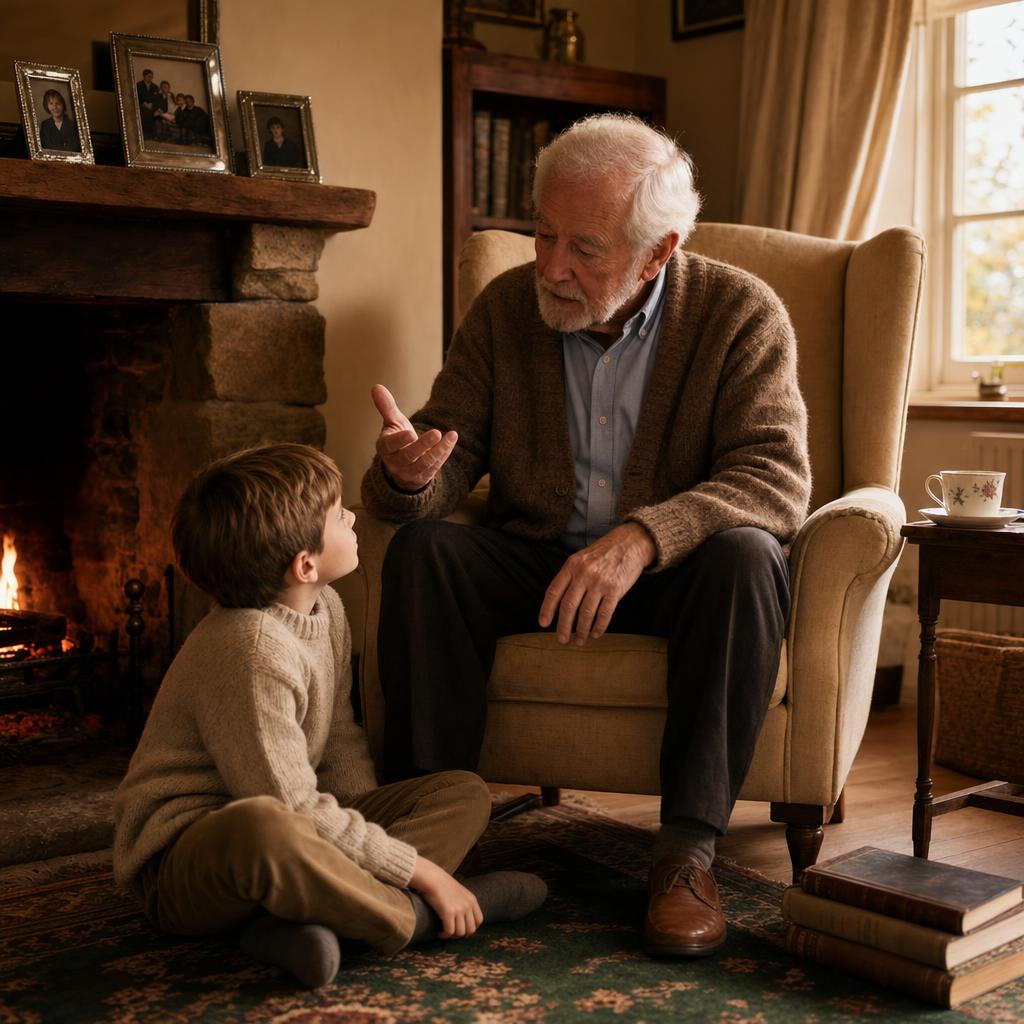
Your children know the adult you became. They know almost nothing about the child you once were. What fades fastest isn’t a big event, it’s the texture of ordinary days: what you ate for an after-school snack, what you did when it rained all afternoon, what you read in a whisper under the covers.
Many people set the idea aside because they think their childhood was unremarkable, or because the word memoir feels too heavy. But this isn’t about writing an autobiography. It’s about setting down a handful of fragments, at your own pace, so your children can picture what your life looked like when you were their age, or the age of their own children.
This piece offers five concrete doorways into that work, without the pressure of a grand project. Not a memoir. A living set of pages, posted one scene at a time.
The child you were is the part your children don’t know
This is often where people stop: what is there to tell, my childhood was ordinary. That is exactly what’s precious. Your children know your adult decisions, your adult tempers, your adult quirks. They cannot picture the shy child who cried before the first day of school, or the resourceful one who traded marbles in the playground.
That gap is wider than you’d think. A child never quite manages to picture their parents as small, let alone their grandparents. When you write the child you were, you aren’t telling a historical story, you’re handing those who read you another key to read you whole.
You don’t need to wait until you’ve recovered everything. A single scene is enough to begin. The rest will come.
The ordinary days, not the big events
The most common mistake is to aim for the big moments: a cousin’s wedding, the year you moved house, the year someone was lost. Those have already been told a hundred times around the family table. They don’t need your page.
What needs your page are the ordinary days. The morning before school: what you ate, who made what, which door you left by. The afternoon after school: what you actually did once you got home. The snack: who handed it to you, what you drank it with, which brand of biscuit kept coming back. The evening meal: the order of the dishes, who talked, who didn’t, what was on the radio or the television.
A few prompts if nothing comes:
- What did you eat on a weekday morning, and what changed on Sunday?
- What did you actually do when it rained all afternoon?
- Which radio or television programme marked a particular hour of the day?
- What did you do in the half-hour between school and supper?
These fragments are irreplaceable. No history book contains them. Your children can watch a period film and believe they know, but they don’t know what you, specifically, did at six o’clock in the evening in the spring of 1968.
The first times
Childhood also breaks down into first times. Not the first step or the first word, which you don’t remember. The conscious first times, the ones that stayed.
The first time you walked to school alone. The first time you took a train. The first time an adult spoke to you as if you were grown up. The first time you saw the sea, snow, a wild animal, an argument between your parents. The first time you were trusted with something important, or someone got you wrong.
Set them down one by one. Half a page is enough. The exact date doesn’t matter. What matters is the scene: where you were, who was there, what you felt that you couldn’t yet name.
A few prompts:
- Which first time made you feel, for the first time, that you weren’t quite a small child anymore?
- Which childhood fear took you the longest to understand?
- Which secret pride have you never told anyone?
- Which piece of mischief seemed, at the time, far more serious than it really was?
The figures around you
A childhood is also made of figures. Not only your parents and siblings, who deserve their own pages. The secondary figures, the ones who showed up for ten minutes a day and were never written down.
The teacher of a particular year, who smelled of what, who said what, who marked you for a precise reason. The Sunday-school teacher, if there was one. The neighbour who fixed bicycles. The woman at the sweet counter. The slightly older cousin you watched from a distance. The classmate you swapped cards with. The uncle who passed through with strange objects.
A few prompts:
- Which adult, outside the family, taught you something you still use today?
- Which childhood friend did you never see again, and what was particular about them?
- Which adult unsettled you a little, and through which precise scene?
- Which animal of your childhood still matters to your memory?
Once written down, those faces will no longer fade. If you don’t put them down, they’ll fade within the decade. If you want to dig into the sensory matter that surrounds them, a separate article is devoted to sensory memories.
Keeping it somewhere
You won’t write all this in one sitting, and that isn’t the point. The point is to hold a place where these fragments can settle without pressure, without a required order, without having to draft a plan.
Some people keep a paper notebook in their bedside drawer. Others write in a document they reopen once a week. Others use a digital notebook like Carnely, which offers the questions one at a time (a Thursday snack, a first time, a face from school) and keeps your voice along with the words, if you prefer to speak rather than type. You answer when you want, you leave it open, you come back the following week.
After a few months, you have fifteen or twenty scenes. Already far more than what your children picture of your childhood today. And they won’t need to wait. They can already step into the material, ask you a question, ask you to keep going where a scene touched them.
That is what sharing your childhood with your children looks like. Not an autobiography. A series of ordinary scenes, set down at your own pace, that gradually draw the child you were and that those who matter to you don’t yet know.
By

Carnely's journal is kept by Pierre Goux, co-founder of Carnely. Articles on choosing and sharing what matters with the people close to you.