Share ·
Sensory memories: writing the smells, gestures and sounds
The smell of bread from your grandmother's oven, the creak of her door, the precise gesture she made to crack an egg. These are the first memories to leave. Here's how to keep them.
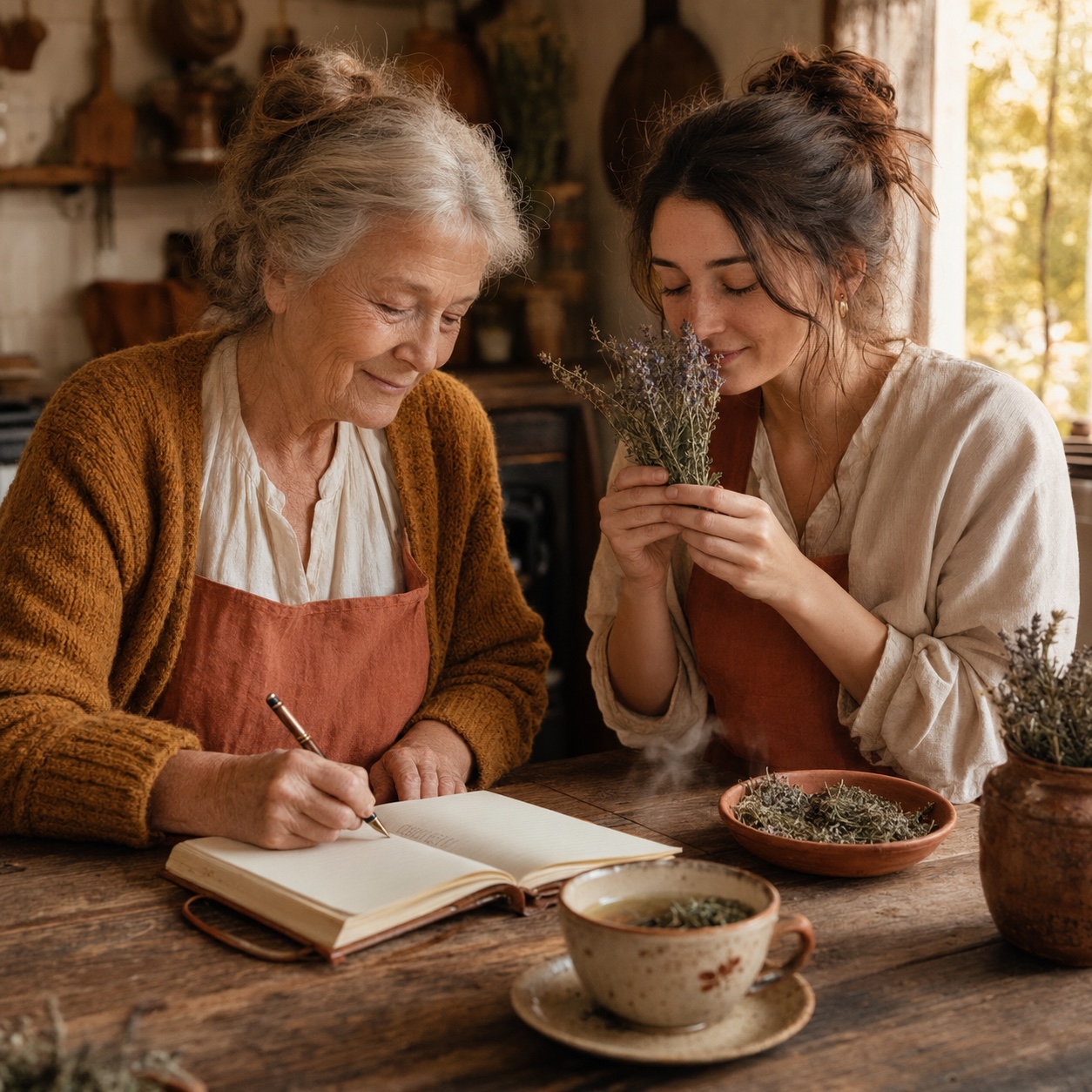
Fifteen years ago, you knew precisely what your grandmother smelled like. A mix of Marseille soap, hand cream, and something older that floated in her wardrobe. Today, you can’t quite describe it any more. The smell is there, at the back of your memory, but when you try to name it, it slips away.
That’s what happens with sensory memories. They are the most powerful when they return, and the hardest to summon when you look for them. No photograph keeps a smell. No video fixes the exact texture of a fabric you loved to touch as a child. Those memories leave first, and no one warns you.
This article suggests a simple way of writing down what fades like that. Smells, gestures, sounds, tastes, textures: a practical guide for fixing them before they evaporate.
What fades first
Memory doesn’t treat every memory in the same way. Images keep well enough, because you find them again in photographs, in films, in the street. The face of a parent stays imprinted.
Sensations have no outside echo. A smell returns only by accident, once every ten years, when you brush past something that comes close. A familiar sound of childhood disappears as soon as the house stops emitting it. A precise gesture, seen a thousand times, becomes blurred within a few years once the person no longer makes it.
That’s what gives those memories their charge when they return, and their fragility in everyday life. To keep them, there is only one way: writing them down.
Five doors
Five entries, for five kinds of memory. You don’t need to open them all. One, done properly, is worth more than a hasty list.
- Smell. The smell of a house, a person, a place, a meal, a season.
- Gesture. A way of holding, of cutting, of brushing one’s hair, of standing up, of closing a door.
- Sound. A voice, a creak, a footstep, the rhythm of someone’s sleep, the chime of a clock.
- Taste. A dish, a drink, a precise combination you can no longer find.
- Texture. A fabric, a handle, a skin, a material you used to touch without thinking.
For each one, the method is the same: choose a precise memory, and describe it with enough detail that it exists on the page.
Writing a smell
Smell is the hardest to write, because our language is poor in words that describe it directly. “It smelled nice” doesn’t do it. “It smelled like my grandmother’s house” is shorthand for those who already know, but says nothing to someone who didn’t.
Three ways around.
By comparison. A smell between beeswax and stale bread, with something mineral like a clean cellar. You approach through associations the reader already holds.
By context. The smell you caught when you pushed open the kitchen door, just as she had finished a wash, and the heat of the gas oven mixed with the steam from the laundry. Context rebuilds the smell in the mind.
By effect. A smell that always made me feel I was safe, without knowing why, and that still reassures me today when something brushes past it by chance. The smell is said through what it released.
The three can combine. A precise paragraph on one smell is worth more than ten lines on ten smells skimmed over.
Writing a gesture
Gesture is easier to write than people think, because you’ve seen it a hundred times and can break it down.
Proceed in three steps. Before the gesture: what the person was doing just before. The gesture itself: broken into two or three very small stages. After: what followed, the silence or the next move.
Example. Before cracking an egg, my mother held it in her palm for two seconds, as if weighing it. Then she tapped the edge of the bowl twice, firmly, and opened the shell with both thumbs in a single motion. The egg slid in without a single piece of shell. She took the empty shell between two fingers and tossed it sharply into the sink.
A gesture, written like that, becomes a portrait. You see the person, you sense their concentration, you grasp their relation to the world.
Writing a sound, a taste, a texture
Same principles, adapted.
A sound is written through its frequency, its regularity, what it signalled. The creak of the third step, that you always heard when my father came down before everyone, around six in the morning.
A taste is written through the simple flavours composing it, the moment you ate it, what accompanied it. The morning coffee, stronger than average, sugared once and a half, in the big white cup, while she reread the letter from the day before.
A texture is written through the sensation at contact, the use you made of it, the variations through the day. The velvet of the red armchair, smooth one way, against the grain the other, that warmed in the four o’clock sun and that you touched without thinking for hours.
In every case, aim for the precise detail rather than the general evocation. The velvet of the red armchair says more than the furniture of the old days.
What to do with them, afterwards
Once written, these sensory memories are worth their precision, not their volume. Fifteen very exact lines on the smell of a kitchen are worth more than ten foggy pages on a whole childhood.
Three ways to keep them.
A scent notebook. A dedicated book where each entry runs a few lines, dated. You return to it when a memory rises. After a few years, the notebook becomes a precious object, telling an era through its senses.
A scattered file. Each sensory page is added to the chapters of a larger project: memoirs, a family book, letters to your children. The sensory gives flesh to what you write elsewhere.
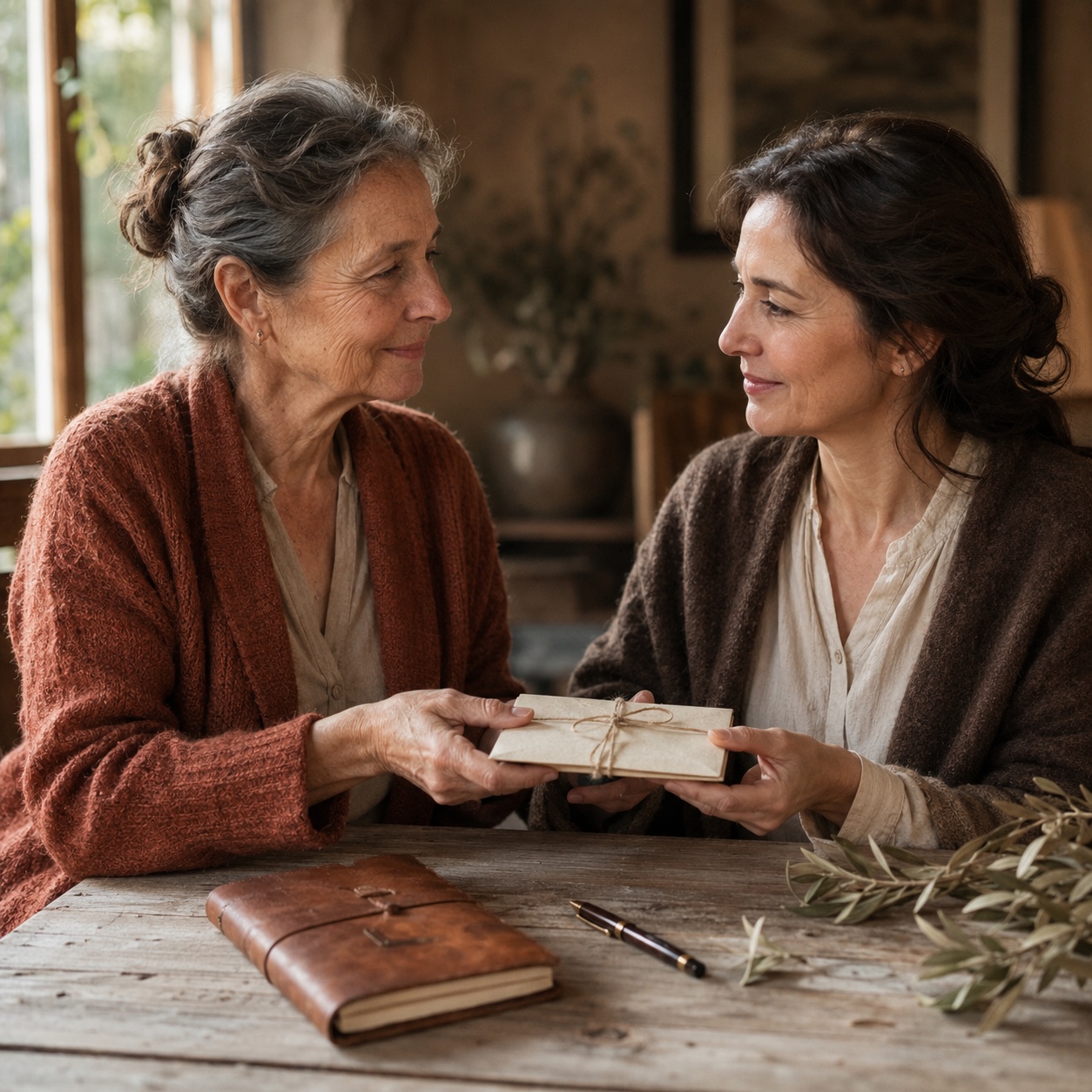
An entrusted transmission. Sensory memories, written down digitally, become especially precious to pass on. It is what no one will know without you: the smell of your childhood house, the exact gesture of a parent no longer here, the texture of an object that is gone. A frame like Carnely lets you put those pages down at your own pace and make them accessible to those you’ve chosen.
A page for tonight
Before closing this article, choose: which smell, which gesture, which sound would I want to find intact in thirty years? That answer is the first page to write.
Going further
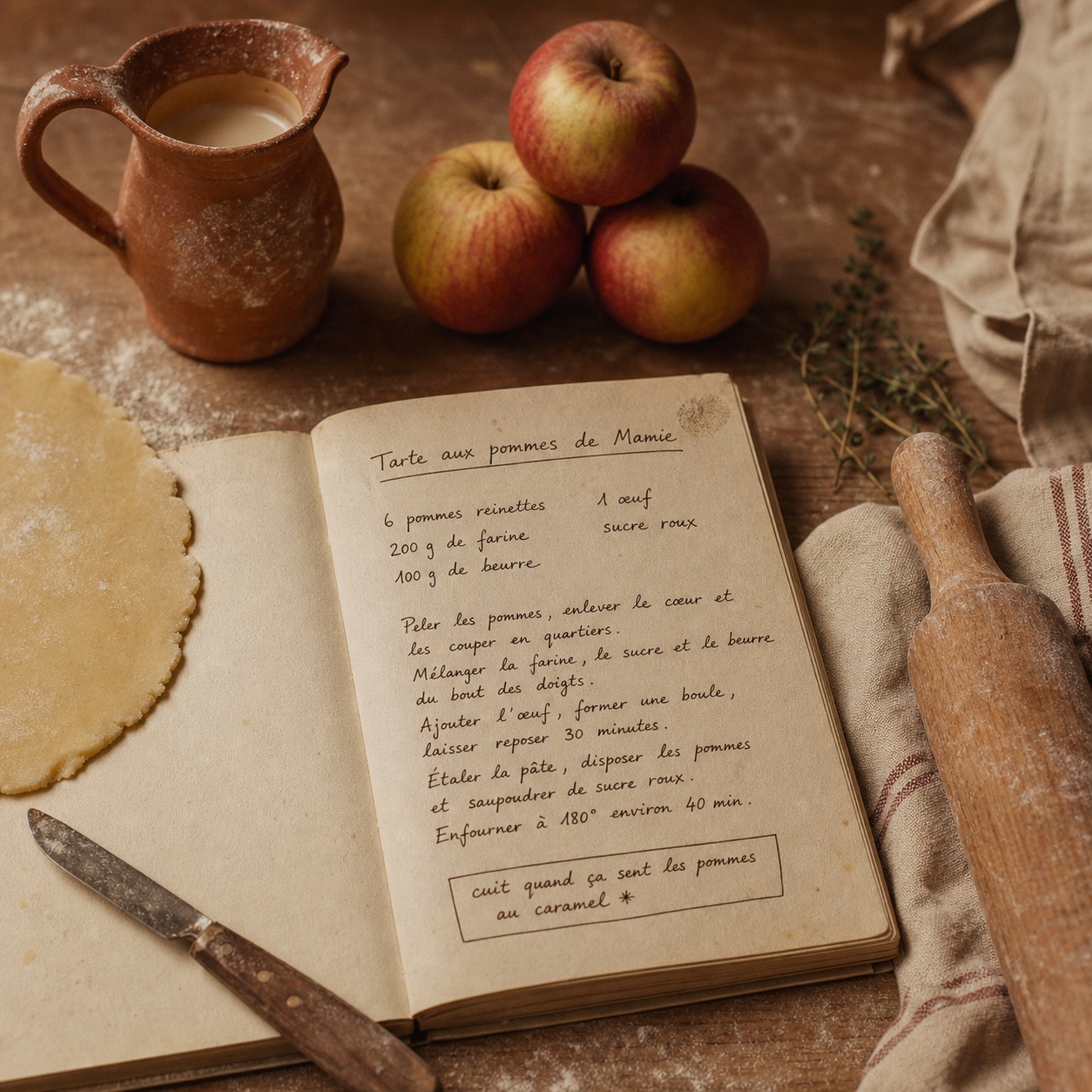
If you’d like to go deeper into writing summer memories and family holidays, here’s how to write what doesn’t fit in a photograph. And if transmission also passes through the kitchen, here’s how to keep family recipes with their tone.
By

Carnely's journal is kept by Pierre Goux, co-founder of Carnely. Articles on choosing and sharing what matters with the people close to you.