Share
Confiding your memories to your circle.
Sharing a memory is not the same as publishing it. It is confiding it to a few chosen people, and no one else.
Most of the places where we share today are built for the crowd: a public feed, an algorithm that decides, counters that turn a moment into a score. Carnely takes the opposite path. A circle of a few people close to you, linked together, where you put down what matters and where each person sees, without noise, what you confide to them.
The articles on this page are about that kind of sharing. How to invite the people close to you into a truly private space, and who to open your circle to. What happens when someone close is touched by a memory and tells you so, simply, with no like and no cascade. How to stay connected to those who live far away, without falling into the flux that erases.
Nothing here is public, ever. You choose what you keep to yourself and what you confide. And what comes back to you, in return, is named attention: "this person was touched", not a number. That is exactly what Carnely sets out to make possible.
-
Share
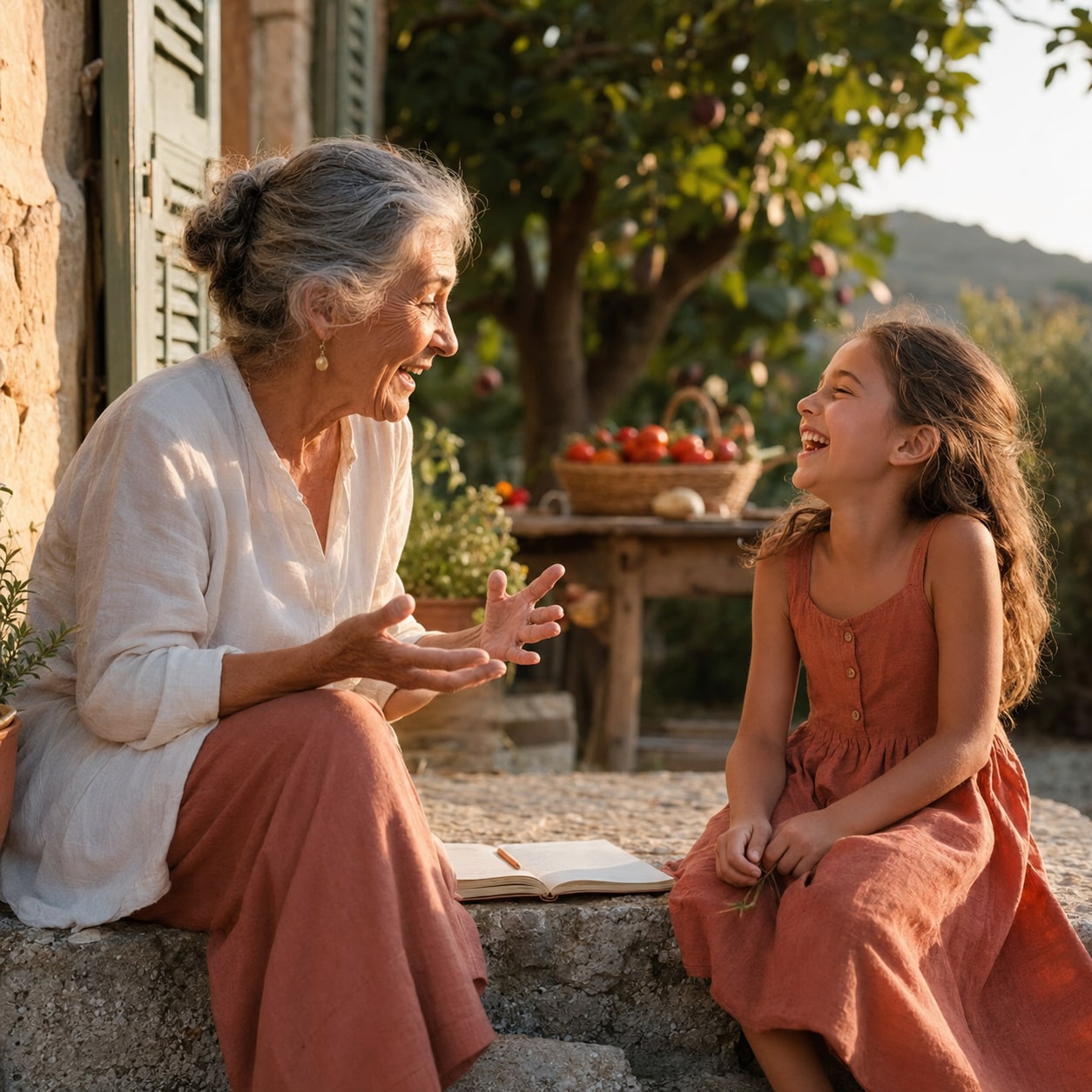
Quitting social media without losing touch
What keeps people on social media is not the feed, it is the fear of losing touch. But the bond never lived in the audience: it rests on a handful of people, and it does very well elsewhere.
Read more -
Share
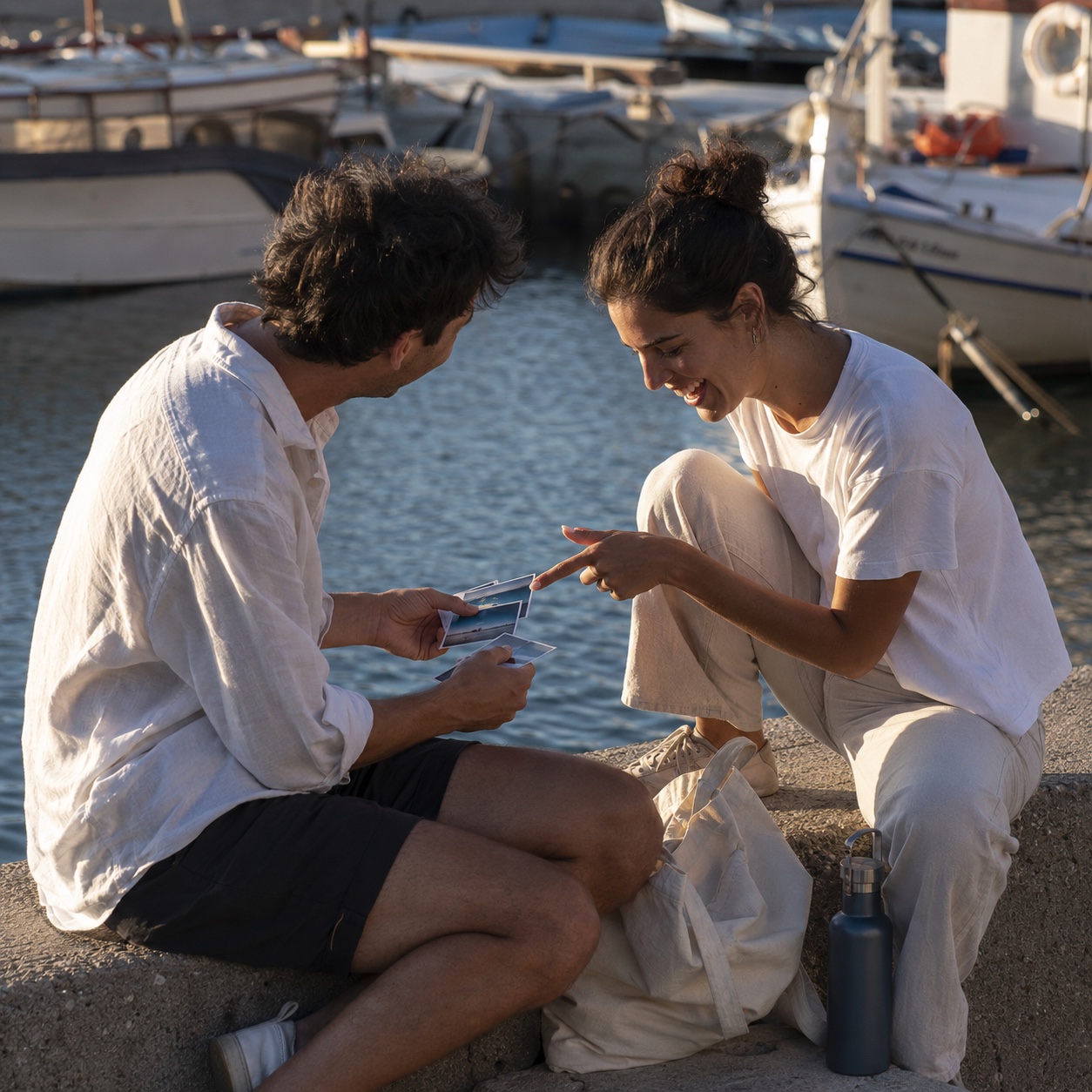
What is a memory, really?
Memory is not a camera, and a photo library is not a memory. A memory is chosen, rebuilt and retold: that is precisely how you recognise one.
Read more -
Share
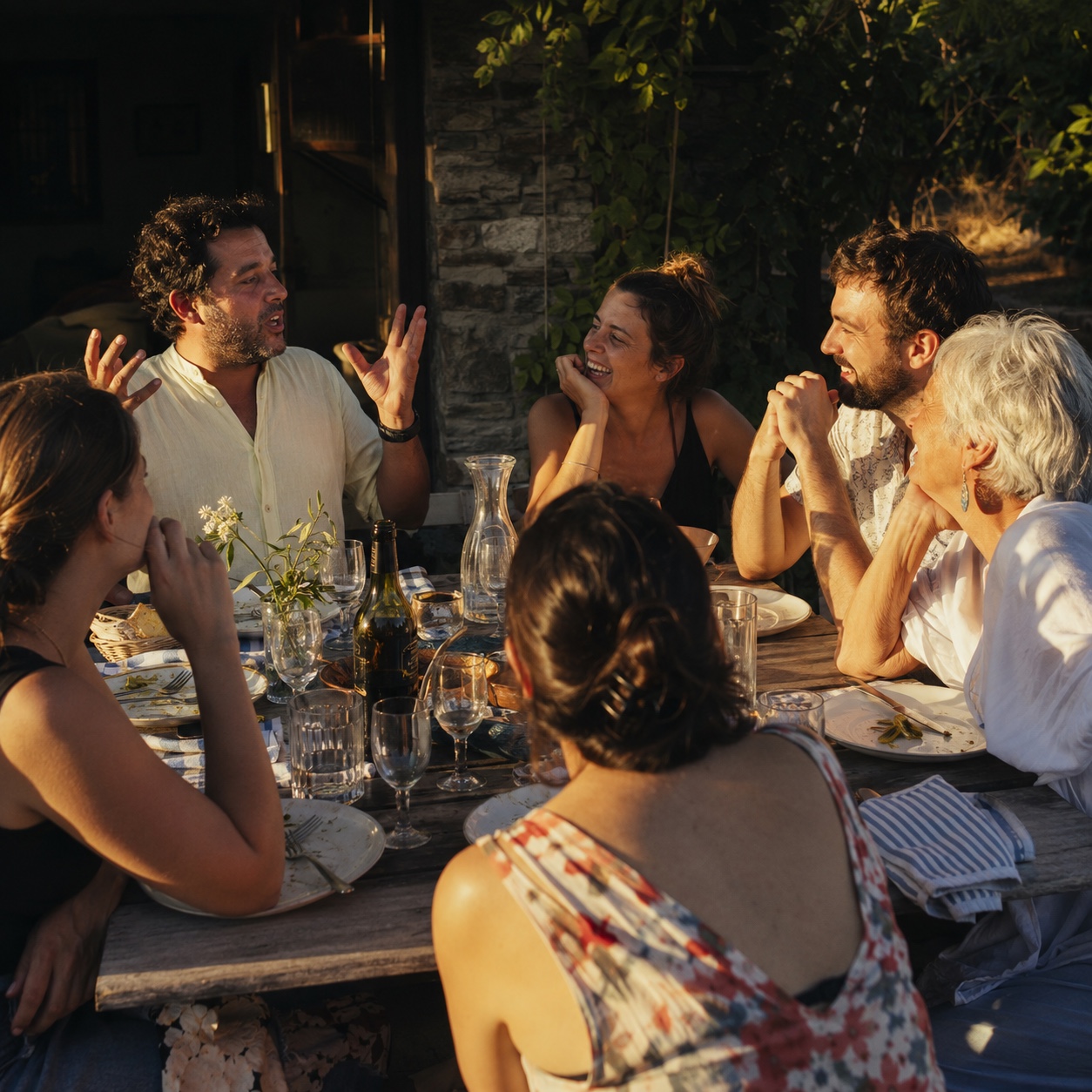
Declutter your photos: keep what matters
Unlimited storage removed the act of choosing. The result: thousands of images and no memory that stands out. Decluttering is not a filing chore, it is an act of memory.
Read more -
Share
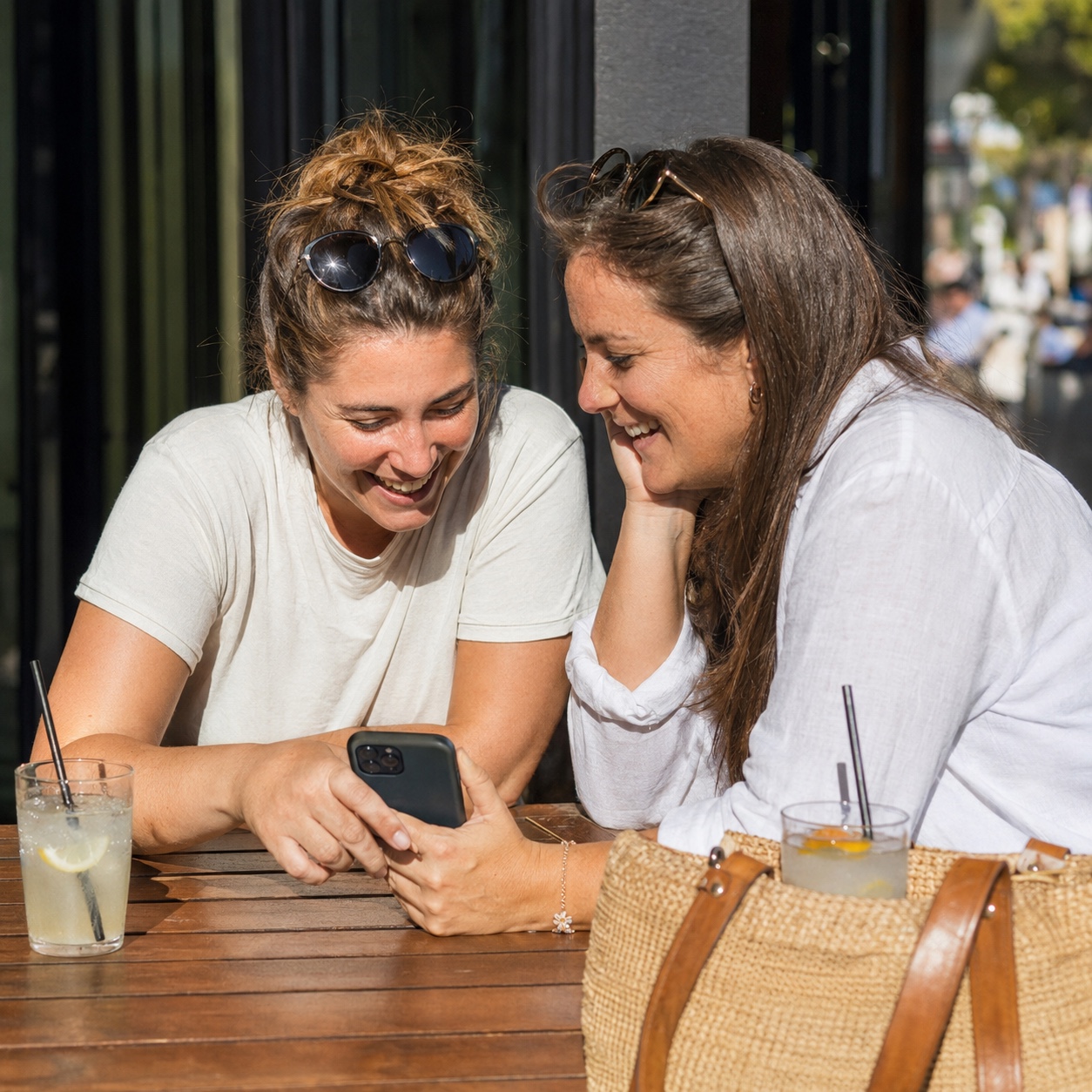
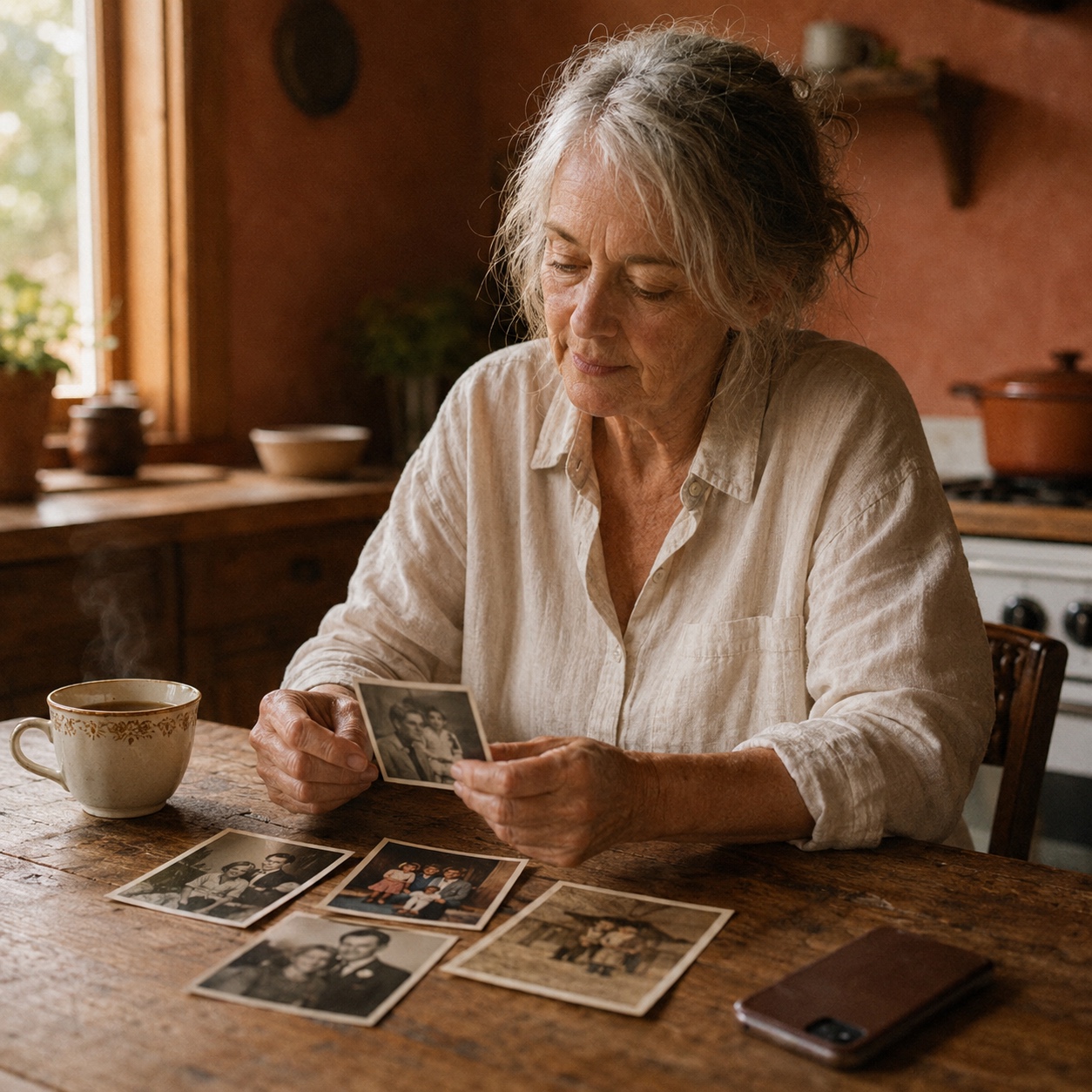
An alternative to the family WhatsApp group: stepping out of the feed
The family WhatsApp group swallows photos, speeds up conversations, turns family into an audience. There is another way to keep the thread alive.
Read more -

Share
Staying in touch with parents long distance, beyond the phone call
Phone calls thin out, not from a lack of love but from a lack of substance. Here is another way to stay close to parents who live far.
Read more -

Share
The first month after they leave: when your child moves abroad
The early calls are frequent and practical. What you put down in those first few weeks lasts longer than what you will say a year from now, because memory holds beginnings.
Read more -
Share
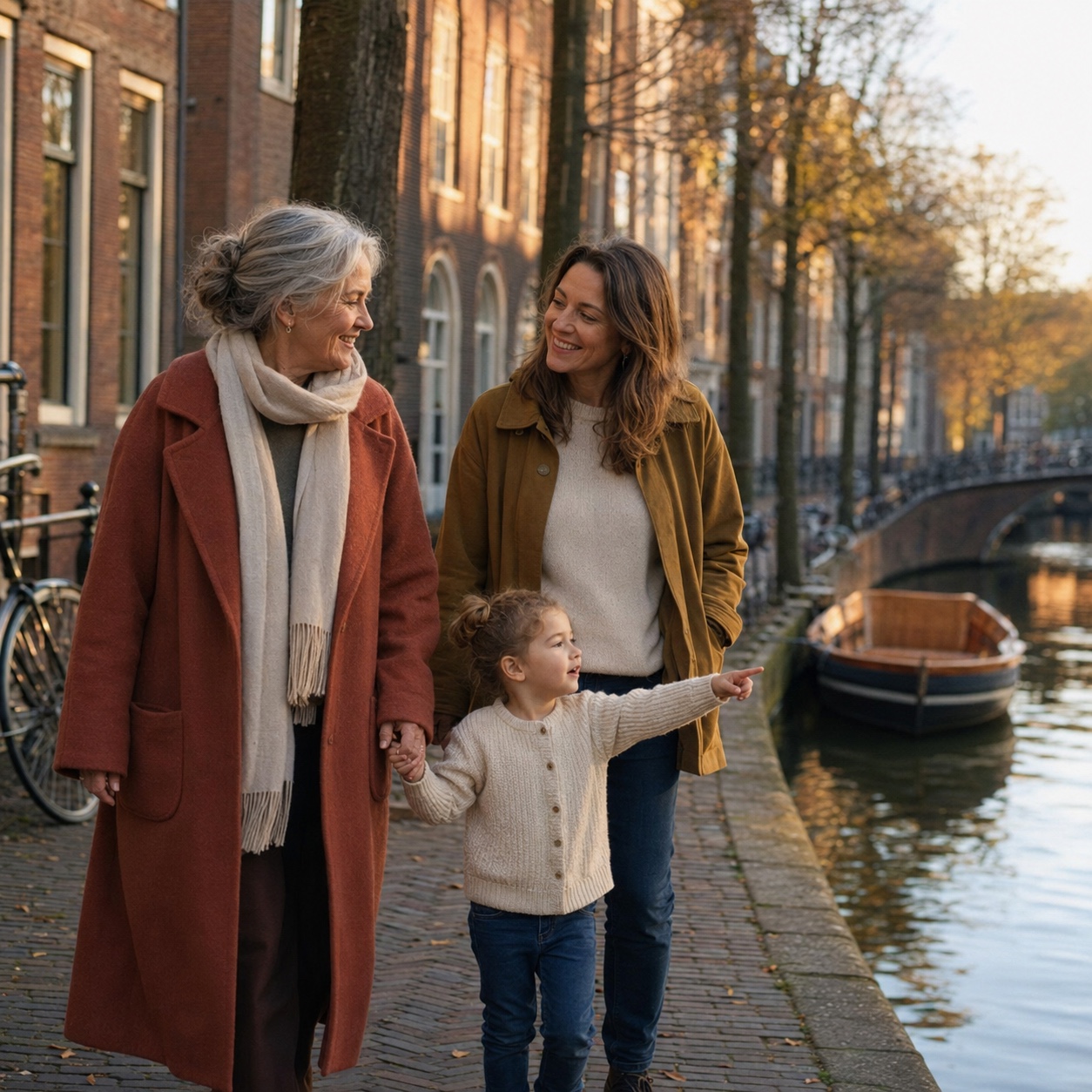
Sharing memories with family abroad
When family lives in several countries, shared memories hold more value than news. Here is how to put them down so the distance doesn't swallow them.
Read more -
Share
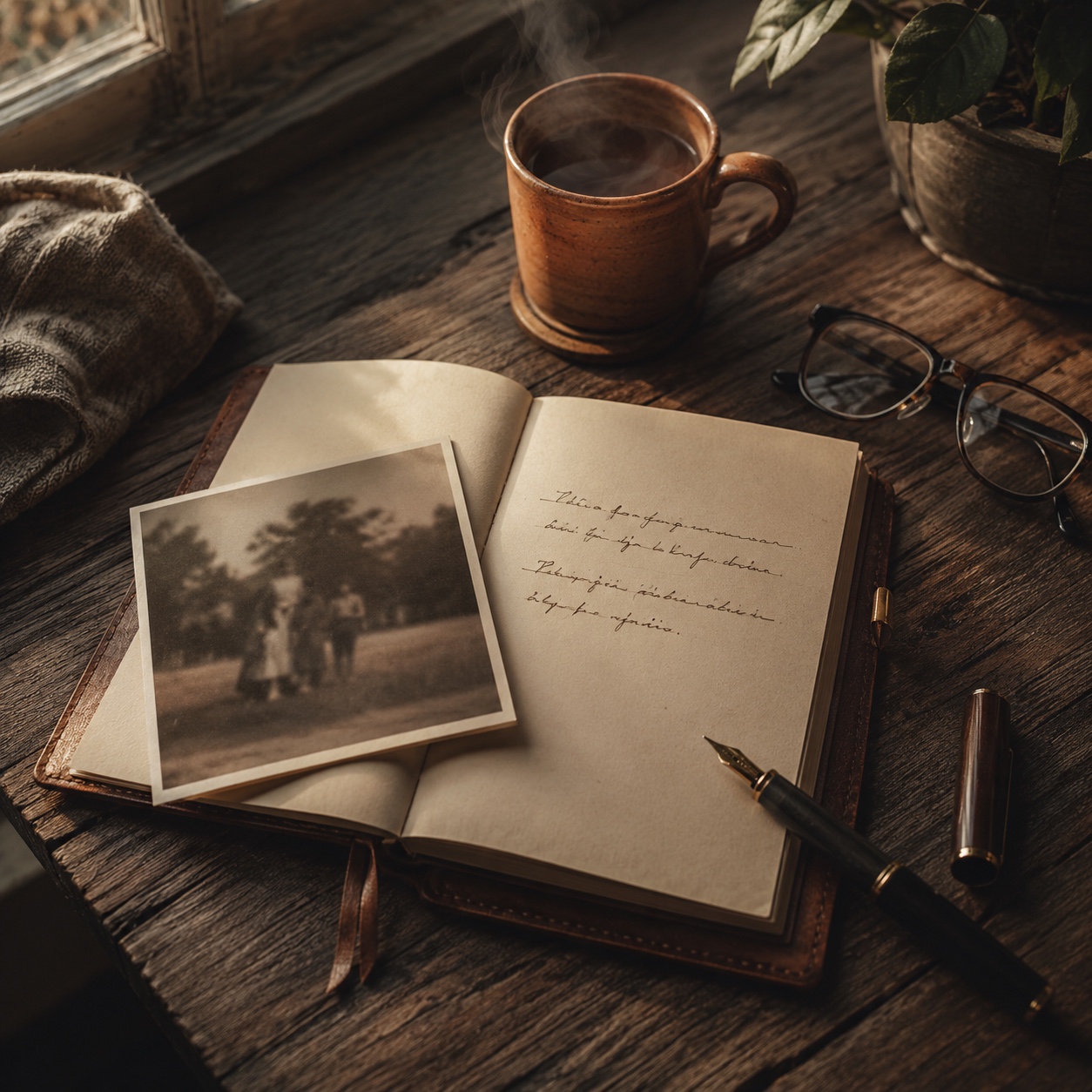
Writing the story behind a family photo: three lines are enough
You have eight thousand photos on your phone, and not one of them says what you actually see in it. Here is a tiny habit that keeps the photo telling who, where and why, even thirty years from now.
Read more -
Share
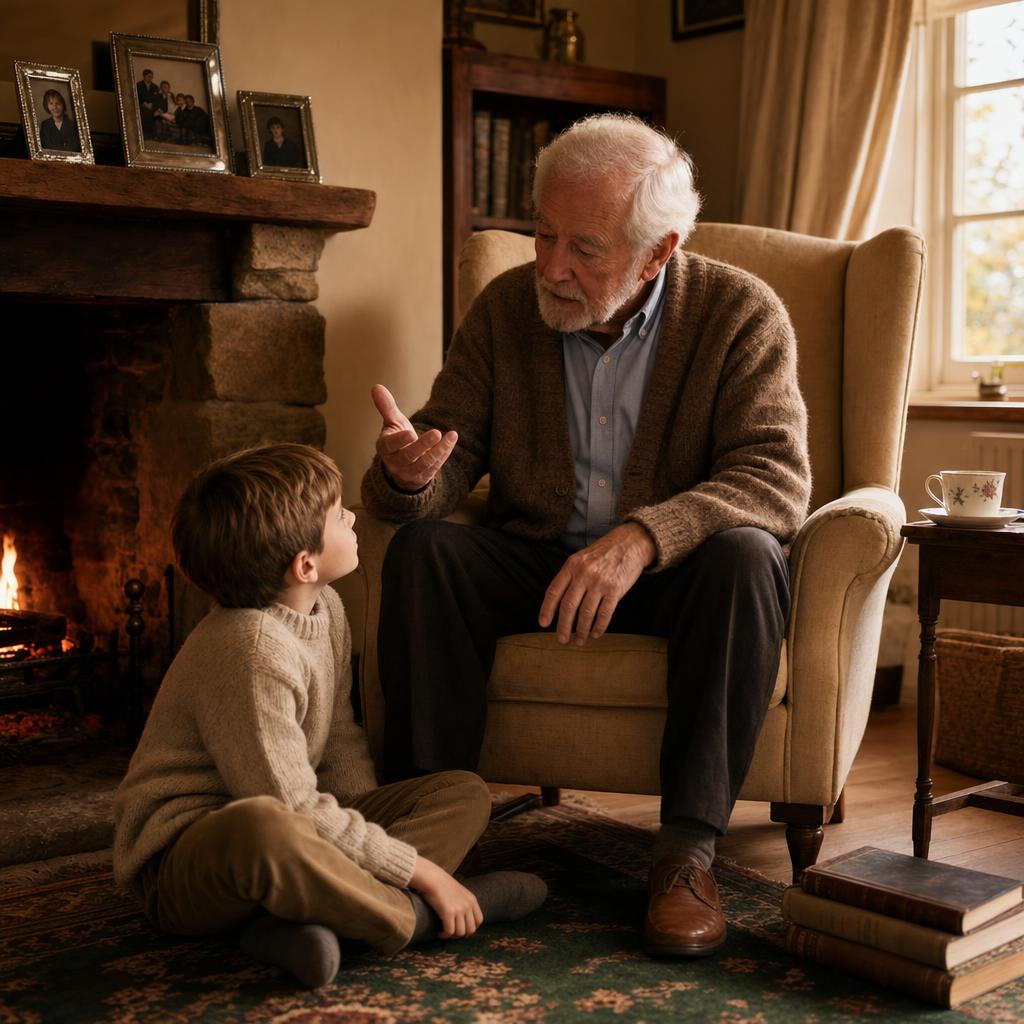
Sharing your childhood with your children, without writing a memoir
Your children know the adult you became. They know almost nothing about the child you once were. What fades fastest isn't an event, it's the texture of ordinary days.
Read more -

Share
How to start writing your life story: a gesture, not a project
We're told that writing your story takes a project, a plan, a chronology. It doesn't. It takes one gesture, tonight, in fifteen minutes.
Read more -
Share
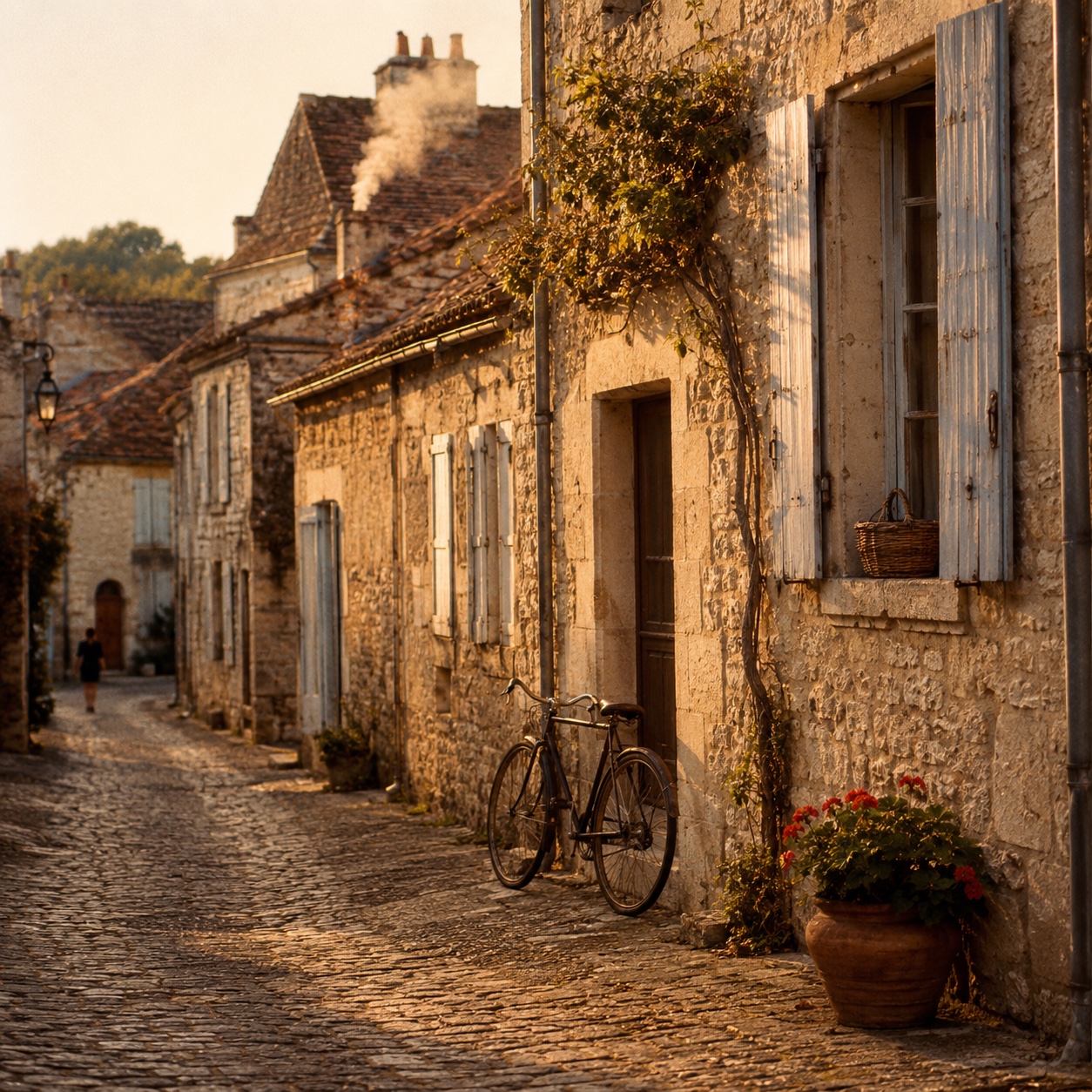
Writing where you come from: your village, your house, your people
Writing where you come from doesn't require tracing a family tree. Start from what comes back when you close your eyes: a place, a few people, a handful of gestures, the sounds of a morning.
Read more -
Share
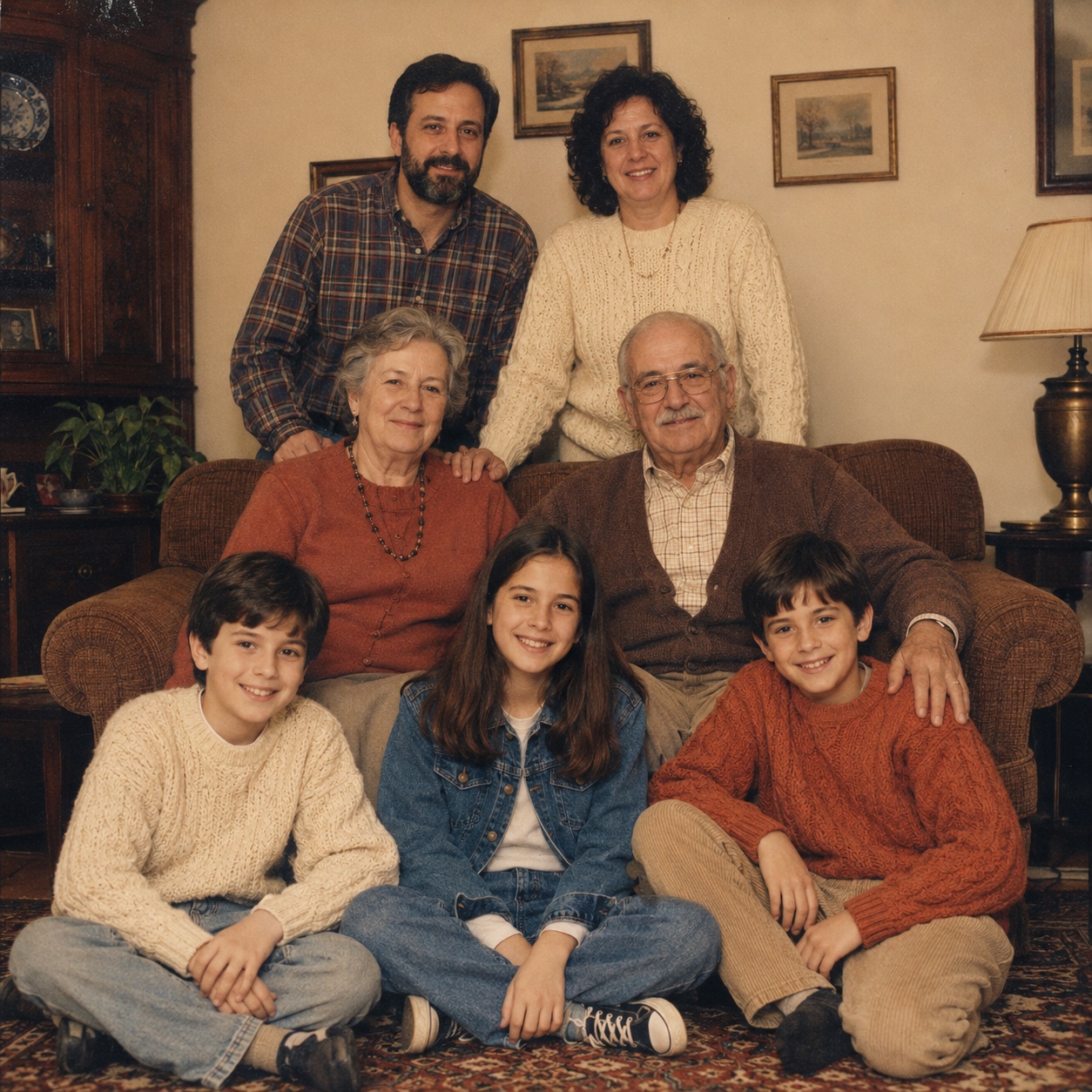
How to write a family biography without becoming a writer
A family biography isn't written in one sitting, nor by one person. It's a shared notebook filled by questions, over several months, with several voices.
Read more -
Share
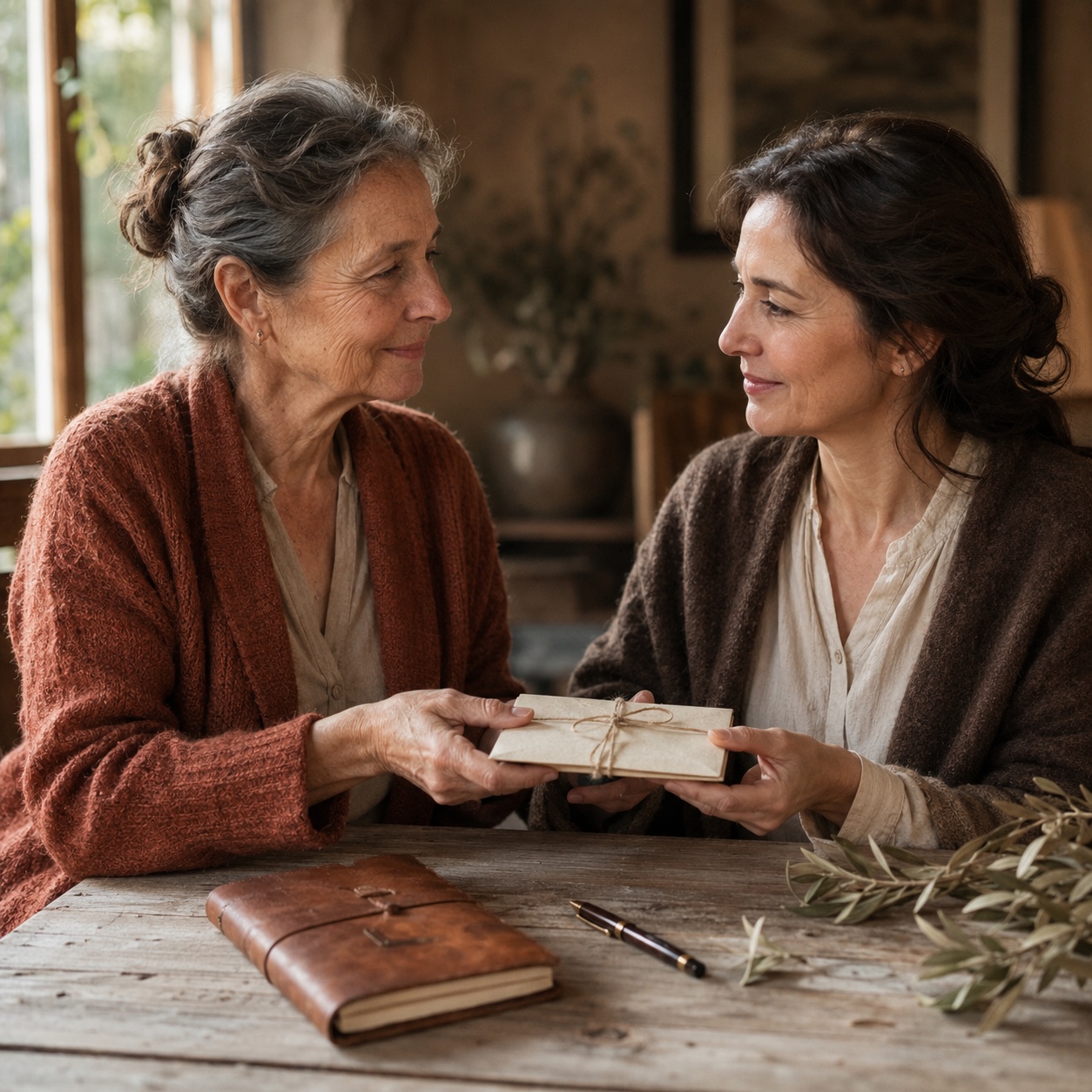
Letter to your child getting married: what you don't say aloud
The microphone, on the morning of the wedding, isn't made for the sentences you truly carry. Those, you write beforehand, and you set them aside for the years that follow.
Read more -
Share
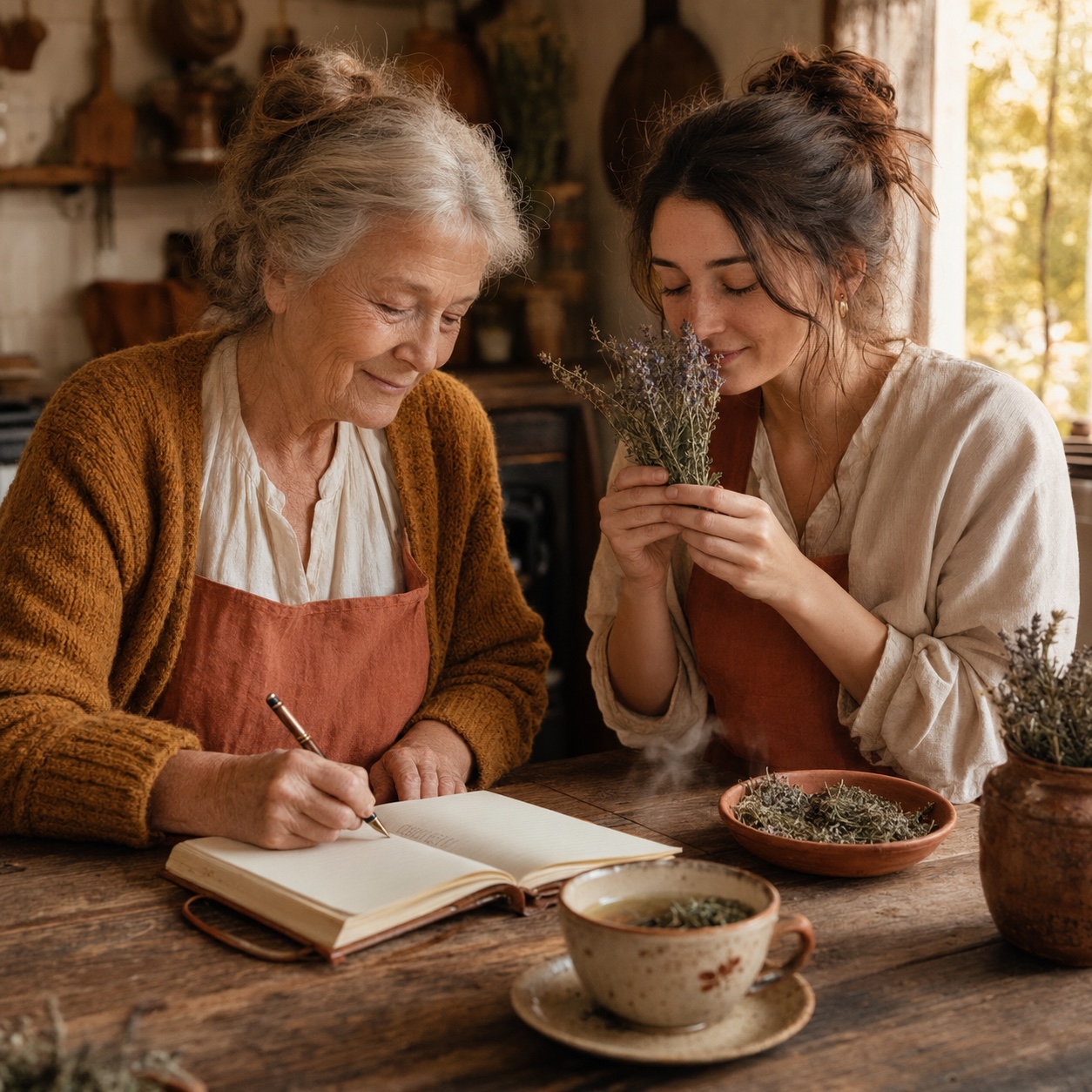
Sensory memories: writing the smells, gestures and sounds
The smell of bread from your grandmother's oven, the creak of her door, the precise gesture she made to crack an egg. These are the first memories to leave. Here's how to keep them.
Read more -
Share
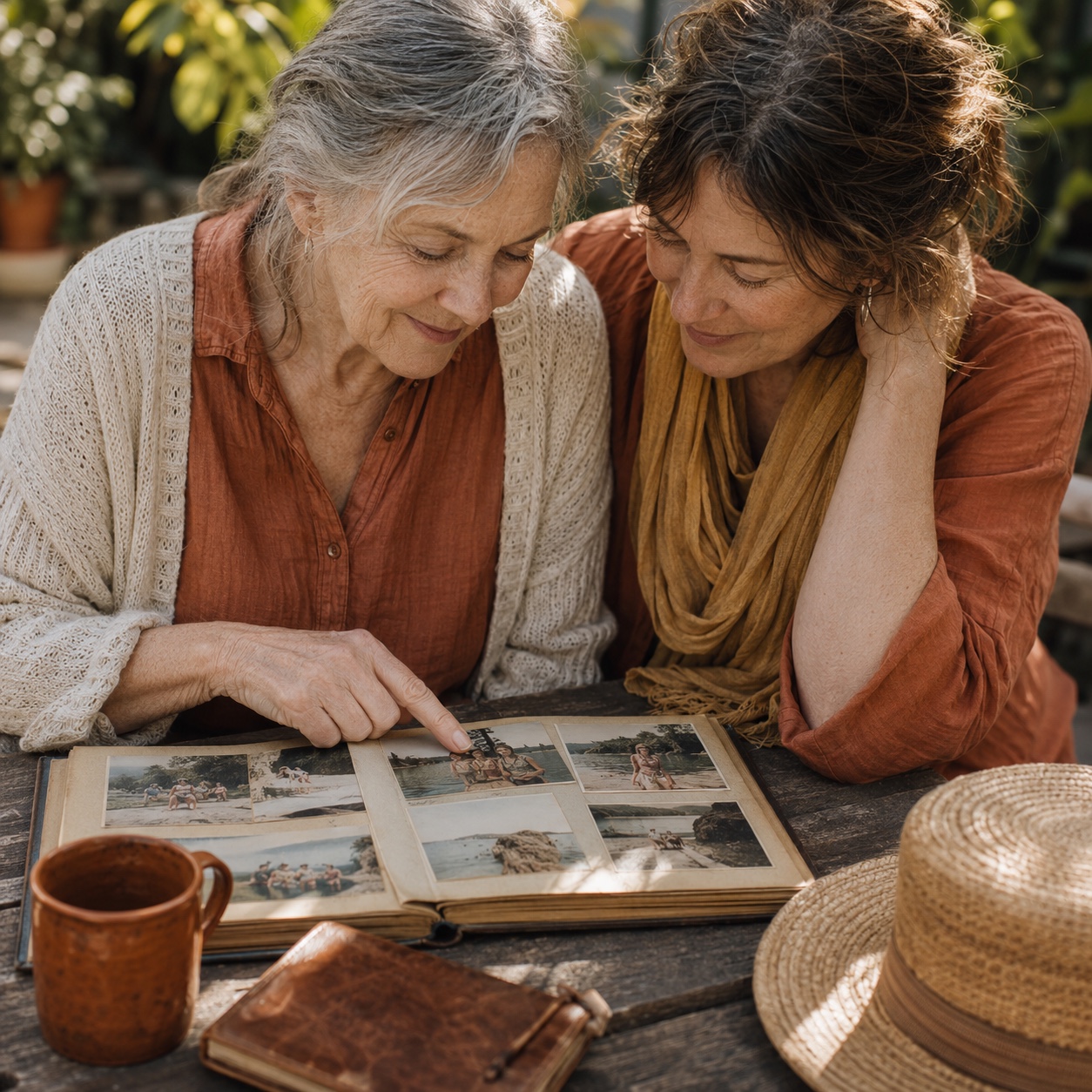
Writing summer memories: what doesn't fit in a photograph
A photograph keeps the face, not the voice. Not the smell of warm pine. Not the sentence spoken that evening, walking. Here's how to write a summer memory so it stays.
Read more -
Share
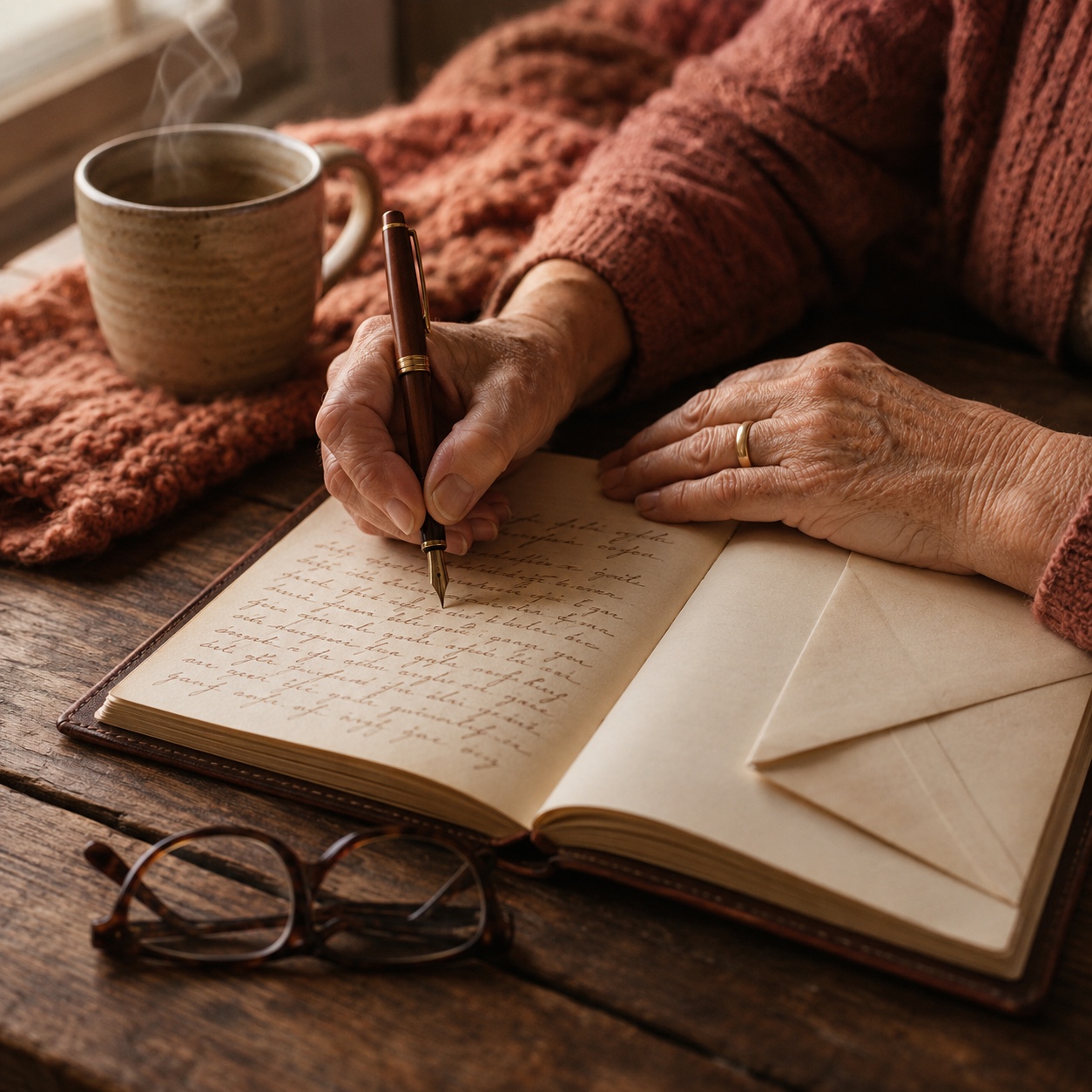
Writing a letter to your children: starting without making it an event
A letter to your children doesn't need to be solemn. It can fit on a page, said simply, addressed to someone you'll see on Sunday.
Read more -
Share
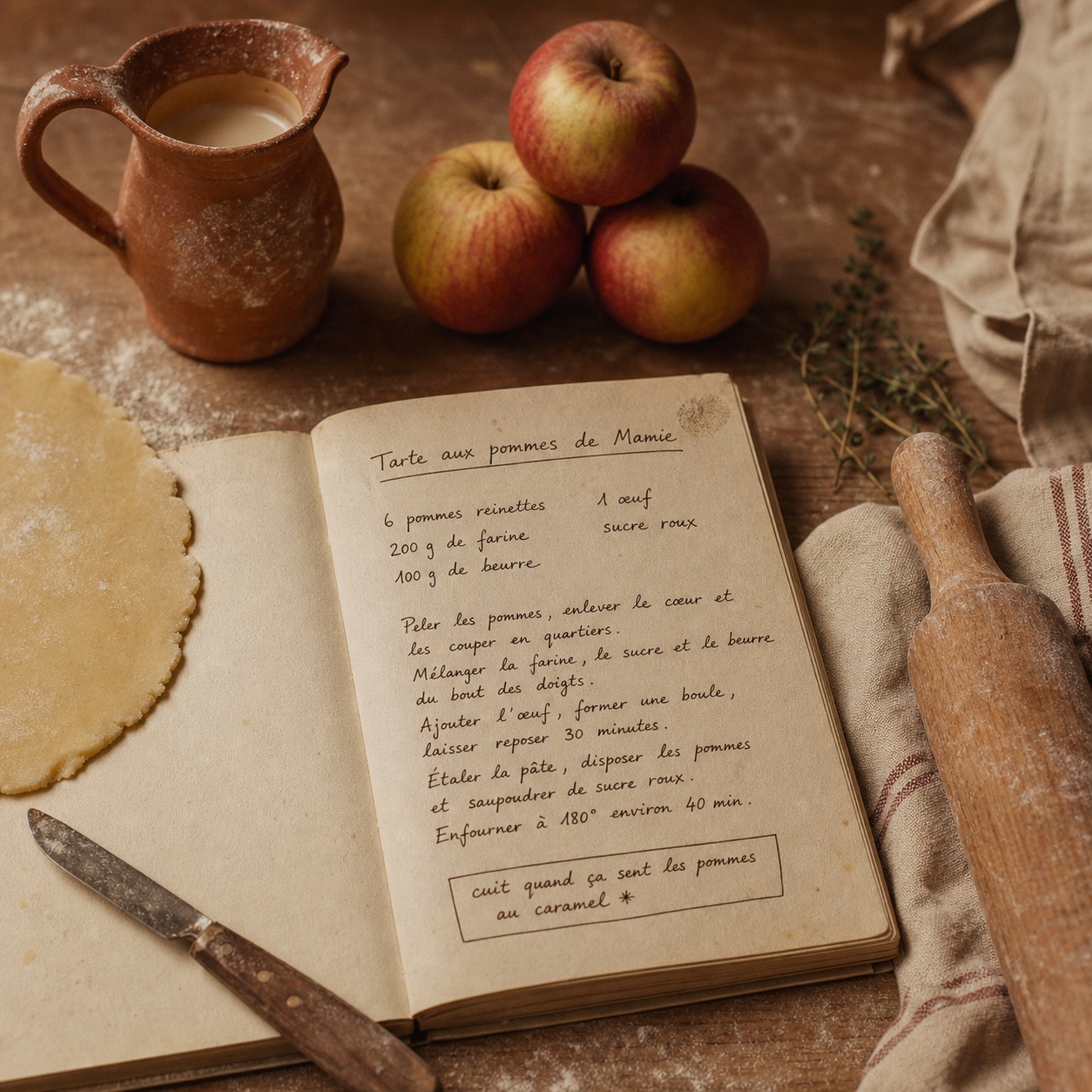
Passing on family recipes: cook, write, share
The recipe of a mother, a grandmother, an uncle who cooks well is living know-how: it's passed on by cooking together, and by writing down the gesture as much as the quantities.
Read more -
Share
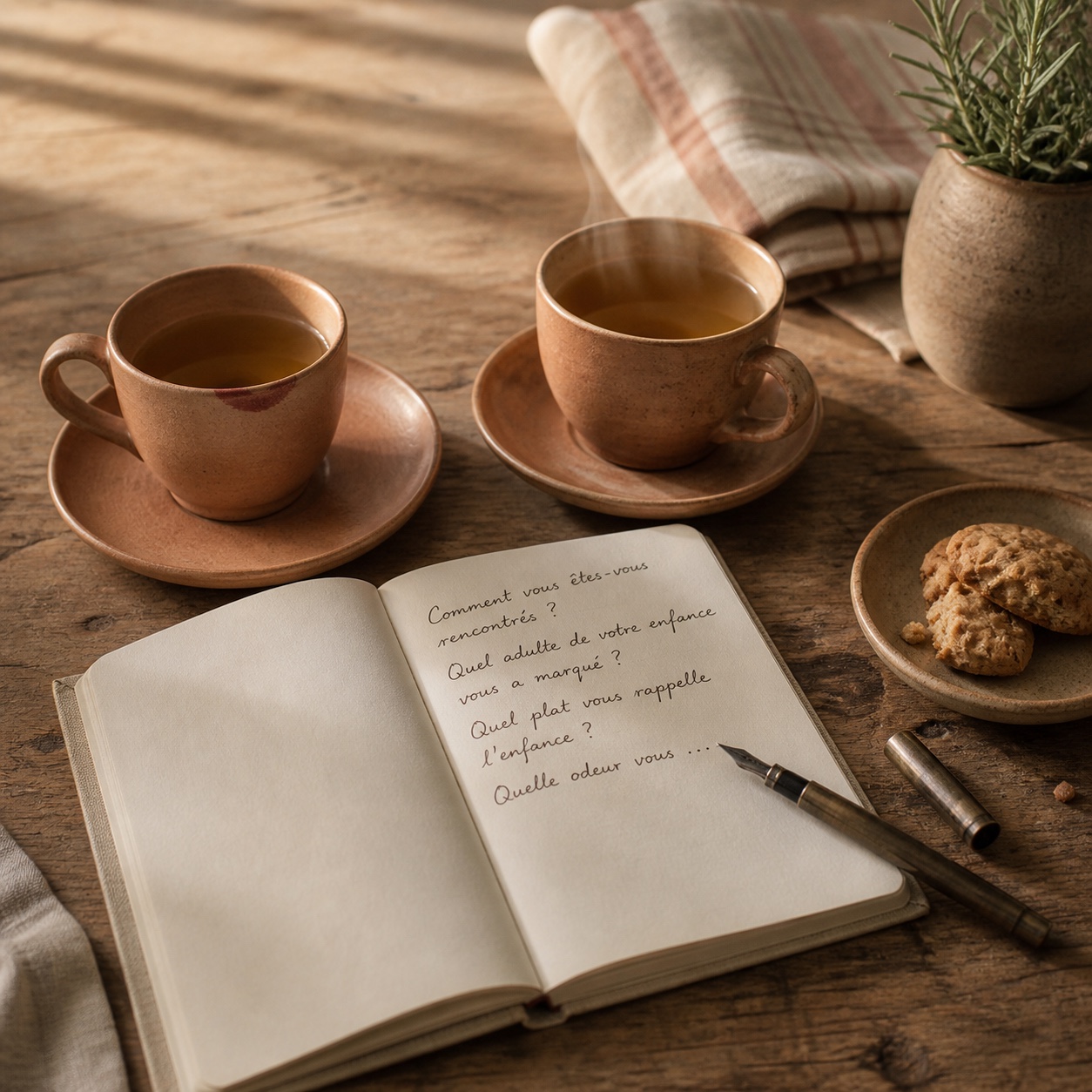
Questions to ask your parents: what makes the difference
The right questions to ask your parents aren't always the ones you'd expect. Here's how to open the conversation, and thirty directions across major themes.
Read more